
In a surprising move, U.S. Customs and Border Protection (CBP) recently announced new restrictions on Canadian access to the Haskell Free Library, which straddles the Vermont-Quebec border. This decision has sparked concern and raised significant questions about the impact on community ties and border security. The CBP’s actions have ignited a heated debate about the need for stricter border control measures and the potential consequences for cross-border relations.
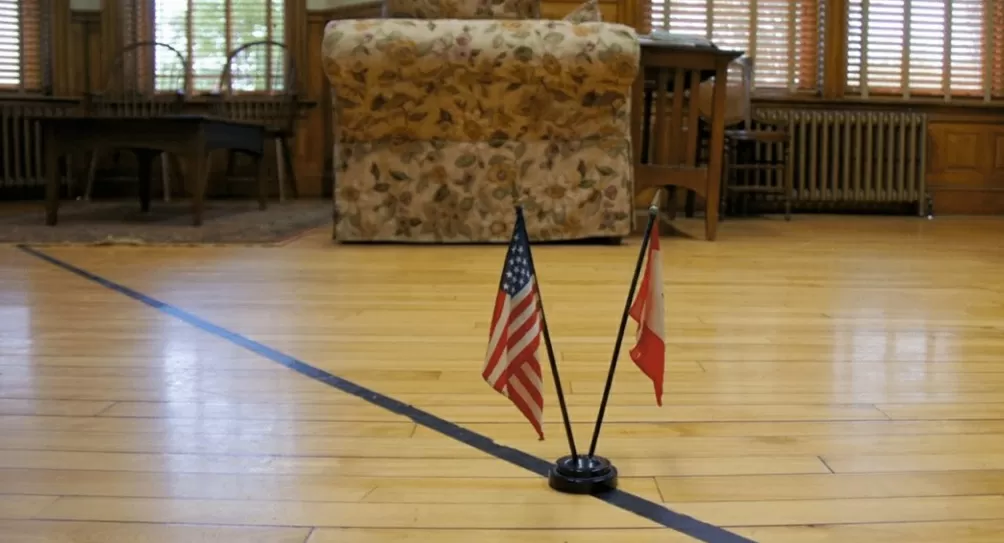
The Haskell Free Library, located in the small town of Derby Line, Vermont, has served as a symbol of the close ties between the United States and Canada for over a century. The building was purposely built straddling the border, with the entrance in the U.S. and the reading room in Canada. This unique arrangement has allowed visitors from both countries to access the library without having to go through immigration procedures. However, under the new CBP restrictions, Canadian visitors will now have to go through a checkpoint to enter the library, effectively limiting their access.
The CBP claims that these restrictions are necessary to ensure border security and prevent illegal immigration. However, many community members and local leaders are concerned about the potential negative impact on the close-knit relationship between Derby Line and its Canadian counterpart, Stanstead, just across the border. The library has served as a gathering place for people from both towns, and these new restrictions could disrupt the strong bonds that have been built over generations.
Furthermore, the CBP’s decision raises questions about the effectiveness and necessity of such stringent measures. Derby Line and Stanstead have a long history of cooperative cross-border activities, including shared emergency services and joint events. The Haskell Free Library itself has never been a security threat, and the limited resources of the CBP could arguably be better used elsewhere.
The announcement of these new restrictions has also sparked broader implications for cross-border relations between the U.S. and Canada. The two countries have long enjoyed a strong and mutually beneficial relationship, and the Haskell Free Library has been a prime example of this. However, recent actions by the CBP, such as the implementation of strict visa policies and the proposed border wall, have strained the historically friendly relationship between the two nations.
The new restrictions on Canadian access to the Haskell Free Library further exacerbate these tensions and send a concerning message about the state of cross-border relations. The decision has caused outrage and disappointment among Canadians, who view the library as a symbol of the strong bond between the two countries. It also adds to the growing perception that the U.S. is becoming increasingly isolationist and unwelcoming to its northern neighbor.
In response to the CBP’s decision, local leaders and community members have voiced their concerns and called for a reconsideration of the new restrictions. Senator Patrick Leahy of Vermont, along with other politicians, has urged the CBP to find a more balanced approach that considers the impact on the local community and cross-border relations.
It is important for the CBP to address legitimate border security concerns, but it should not come at the cost of damaging the strong ties between the U.S. and Canada. We must remember that our countries share a long history, common values, and an interconnected economy. The Haskell Free Library has been a shining example of this special relationship, and it would be a shame to let it become another casualty of stricter border policies.
In conclusion, the recent restrictions on Canadian access to the Haskell Free Library have sparked important discussions about the balance between border security and community ties. The decision has raised questions about the effectiveness and necessity of such measures and has had broader implications for cross-border relations. It is crucial for the CBP to carefully consider the impact of their actions and find a solution that preserves the special bond between the U.S. and Canada. Let us not forget the words of former U.S. President John F. Kennedy, “Geography has made us neighbors. History has made us friends. Economics has made us partners, and necessity has made us allies. Those whom nature hath so joined together, let no man put asunder.”
