
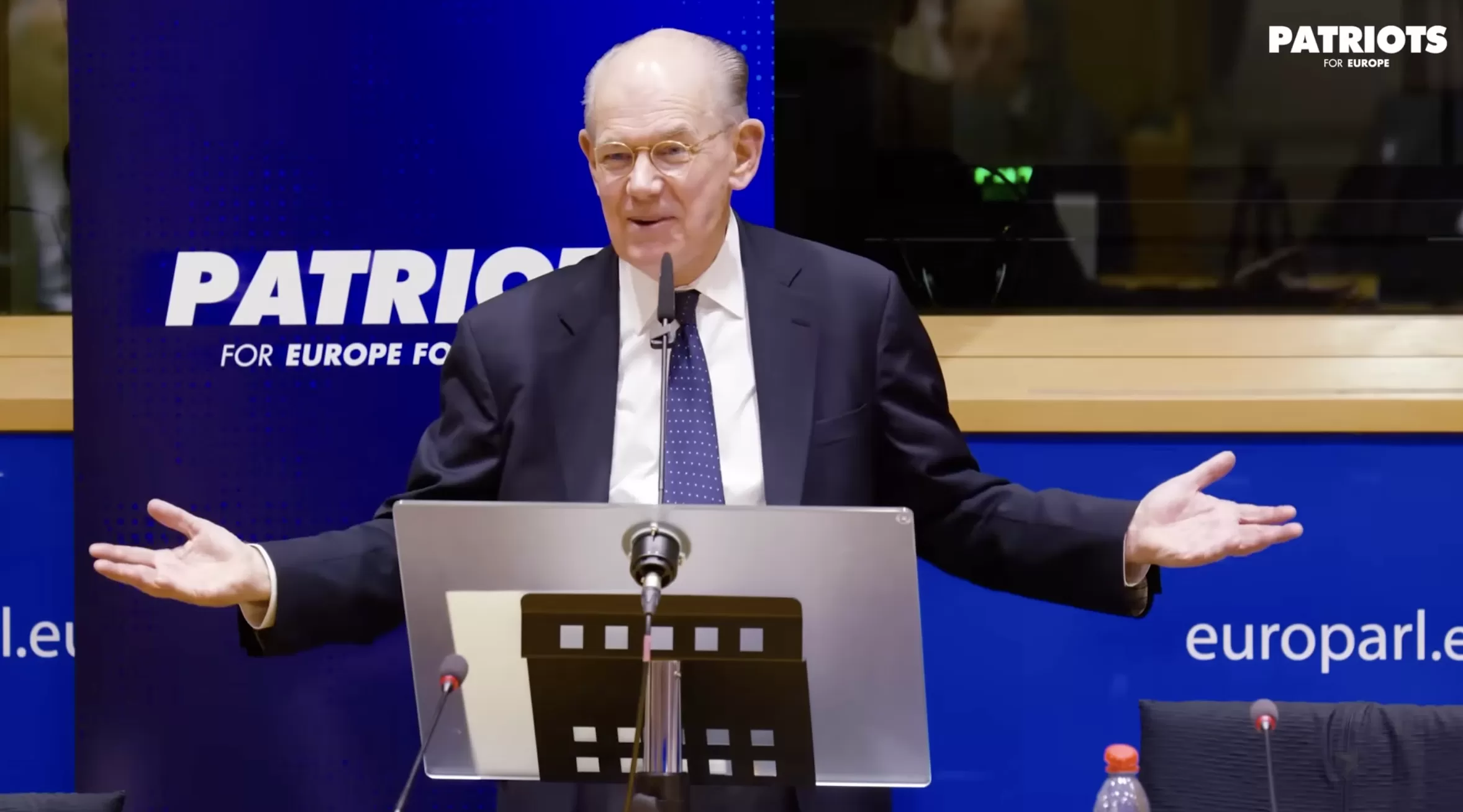
Europe’s ruling class was recently shaken by a powerful warning from renowned American scholar John Mearsheimer. Speaking at the invitation of the Flemish nationalists of Vlaams Belang, Mearsheimer delivered a stark message to the European Parliament – Europe’s geopolitical relevance is collapsing.
Mearsheimer, a distinguished professor of political science at the University of Chicago, is a leading expert in international relations and has authored several influential books on the subject. His speech at the European Parliament was a wake-up call for Europe’s leaders, who have long been complacent about the continent’s position in the world.
In his address, Mearsheimer highlighted the growing power of China and the United States, and how their rivalry is reshaping the global order. He warned that Europe’s traditional allies, such as the US, may no longer be reliable partners in the face of this new geopolitical landscape. This, coupled with Europe’s internal divisions and lack of a unified foreign policy, is causing the continent’s relevance to decline.
Mearsheimer’s words struck a nerve with many European leaders, who have been preoccupied with internal issues such as Brexit and the rise of populism. But his message was clear – Europe must wake up and take action if it wants to remain a relevant player on the world stage.
The fact is, Europe’s geopolitical relevance is at risk. The rise of China and its economic and military power is shifting the balance of power in the world. The US, under President Trump, has also adopted a more isolationist stance, focusing on its own interests rather than those of its traditional allies. This leaves Europe vulnerable and exposed.
But it’s not just external factors that are threatening Europe’s relevance. The continent is also facing internal challenges that are hindering its ability to act as a united force. The European Union, once seen as a symbol of unity and strength, is now struggling with divisions and disagreements among its member states. This has weakened its ability to speak with one voice on the global stage.
Mearsheimer’s warning comes at a crucial time for Europe. As the world becomes increasingly interconnected, it is more important than ever for Europe to have a strong and unified foreign policy. This is not just about maintaining its relevance, but also about safeguarding its interests and values.
So what can Europe do to address this warning and reclaim its geopolitical relevance? The first step is for European leaders to acknowledge the gravity of the situation and to work towards a more unified foreign policy. This means putting aside internal differences and speaking with one voice on the global stage.
Secondly, Europe must invest in its own defense and security. As Mearsheimer pointed out, Europe is heavily reliant on the US for its defense, but this may not always be the case. The continent must take responsibility for its own security and invest in its military capabilities.
Finally, Europe must also look to strengthen its relationships with emerging powers such as China and India. These countries are becoming major players in the global arena and Europe cannot afford to ignore them. By building strong partnerships, Europe can ensure its relevance in a changing world.
Mearsheimer’s warning may have been a wake-up call, but it is also an opportunity for Europe to reassess its position and take action. The continent has a rich history and a strong cultural identity, and it has the potential to be a major player in the world. But this can only be achieved if Europe’s leaders are willing to work together and take decisive action.
In conclusion, John Mearsheimer’s address to the European Parliament was a stark reminder that Europe’s geopolitical relevance is at risk. But it is also a call to action for European leaders to come together and work towards a more unified and assertive foreign policy. By doing so, Europe can not only maintain its relevance, but also shape the future of the world in a positive way. The time to act is now.
