
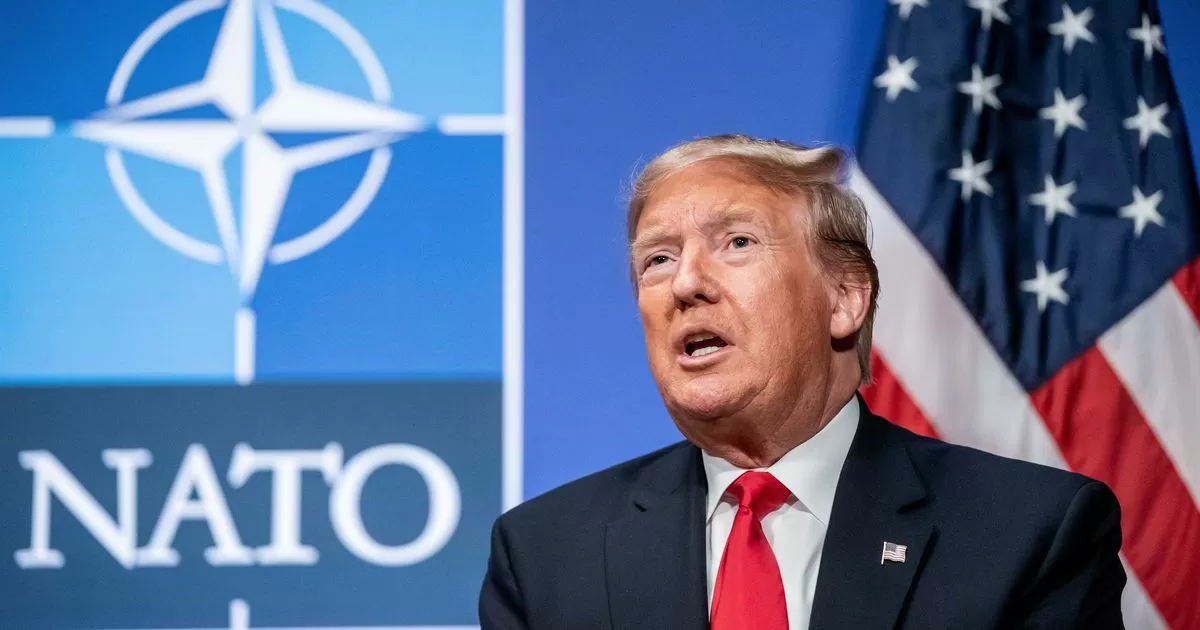
Amidst rising tensions with globalist Eurocrats over Greenland, the Trump administration has made a significant move that could potentially reshape America’s role in NATO. In a quiet yet significant move, the administration has begun a drawdown of American troops from NATO, indicating a reevaluation of the long-standing alliance between the United States and Europe.
For years, the United States has shouldered the responsibility of being Europe’s sole security guarantor. This arrangement has been beneficial for both sides, with the US providing military protection and Europe serving as a key market for American goods and services. However, recent events have highlighted the one-sided nature of this alliance, with the US being expected to bear the burden of military spending and defense while European countries continue to lag behind.
The most recent source of tension between the US and Europe has been the issue of Greenland. President Trump’s interest in purchasing the island has sparked outrage among Eurocrats, who view it as a threat to their influence over the region. This clash has exposed the deep-rooted differences and imbalances within the NATO alliance, and the Trump administration’s response has been a signal of change.
The US has been gradually reducing its military presence in Europe over the past few years, but the recent move is more significant. It involves the withdrawal of thousands of troops from Germany, a country that has long benefited from America’s security umbrella. This decision has been met with criticism and concern from European leaders, who fear a weakening of NATO’s defense capabilities.
However, the Trump administration’s decision is not a sign of turning its back on Europe. Instead, it is a call for a fairer and more balanced alliance. The US has been bearing the lion’s share of military spending within NATO, with European countries falling short of their commitment to allocate 2% of their GDP towards defense. This has created an unequal burden-sharing, with the US spending over 3.4% of its GDP on defense while some European countries barely reach 1%.
President Trump has been vocal about his desire for fair burden-sharing within NATO, and the recent move is a step towards achieving this goal. By reducing its military presence in Europe, the US is sending a clear message that it expects its allies to step up and fulfill their financial obligations towards defense spending. This will not only ease the financial burden on the US but also create a more balanced and effective alliance.
Critics of the Trump administration may view this move as a sign of isolationism and weakening of America’s global influence. However, it is important to note that the US will still maintain a significant presence in Europe, with around 25,000 troops stationed in various countries. This withdrawal is not a retreat, but a call for a fairer and more mutually beneficial partnership within NATO.
Moreover, this decision also aligns with President Trump’s “America First” agenda, where he aims to prioritize the interests and well-being of the American people. By reducing its military presence in Europe, the US can redirect its resources towards domestic issues and address the needs of its own citizens. This is a responsible move that puts the interests of the American people first.
In conclusion, the Trump administration’s quiet NATO drawdown is a significant move that could potentially reshape America’s role in the alliance. It is a call for fair burden-sharing and a more balanced partnership within NATO. This decision should not be viewed as a weakening of America’s global influence, but rather a step towards prioritizing the interests of the American people. As the US continues to navigate its relationships with its allies, it is important to remember that America’s strength lies in a fair and mutually beneficial partnership.
