
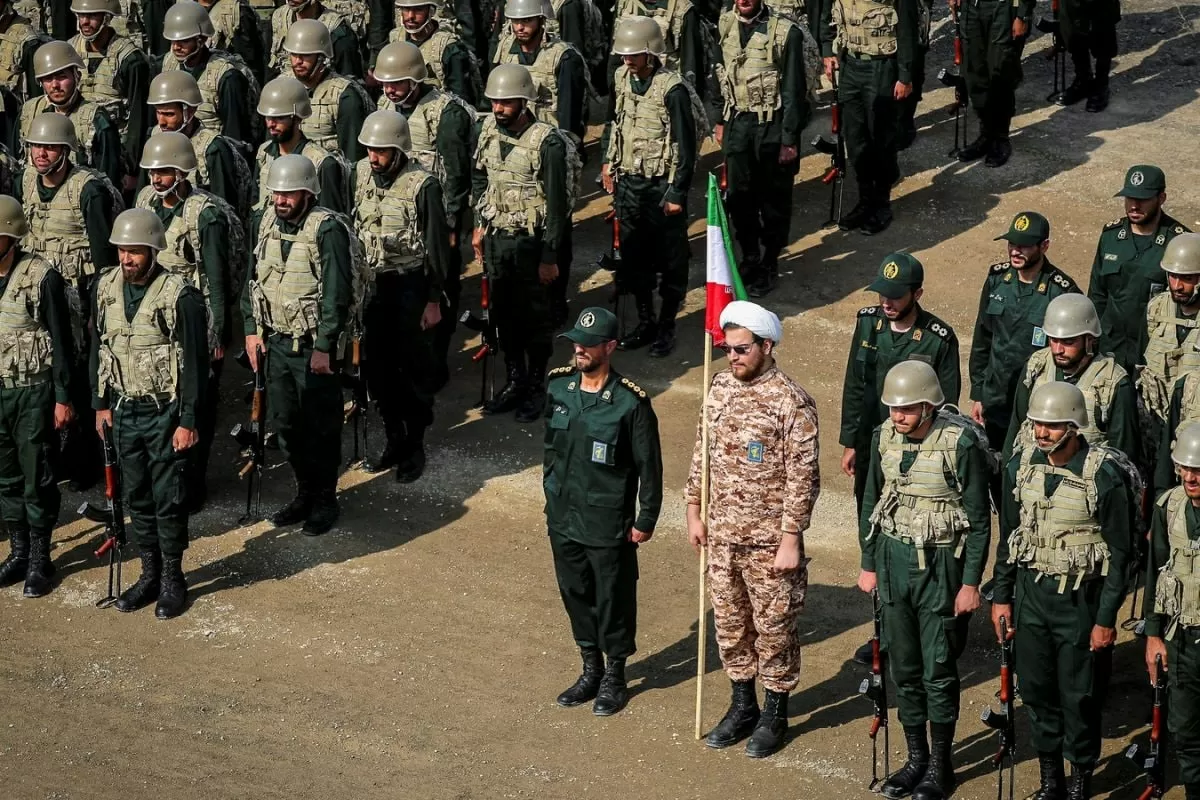
EU Designates Iran’s Islamic Revolutionary Guard Corps as a Terrorist Group Over Violent Protest Crackdowns
The European Union has taken a bold and decisive step in the fight against terrorism by designating Iran’s Islamic Revolutionary Guard Corps (IRGC) as a terrorist group. This move comes after the IRGC’s brutal crackdown on peaceful protesters in Iran, which has sparked outrage and condemnation from the international community.
The IRGC, which was established in 1979 after the Iranian Revolution, is a powerful military force that operates independently from the regular armed forces in Iran. It is responsible for protecting the country’s Islamic system and upholding the ideals of the revolution. However, in recent years, the IRGC has been heavily involved in Iran’s political and economic affairs, exerting its influence and control over various sectors of the country.
The EU’s decision to designate the IRGC as a terrorist group is a significant move that sends a strong message to the Iranian government. It highlights the EU’s commitment to combatting terrorism and standing up for human rights and democracy. The EU has made it clear that it will not turn a blind eye to the IRGC’s actions, which have resulted in the deaths of innocent civilians and the suppression of basic human rights.
The IRGC has a history of using violence and repression as a means of maintaining its grip on power in Iran. This was evident during the nationwide protests that erupted in Iran in November 2019, following a sudden increase in fuel prices. The IRGC played a key role in suppressing the protests, using excessive force and live ammunition against unarmed civilians. The brutal crackdown resulted in the deaths of hundreds of protesters and the arrests of thousands more.
The EU’s designation of the IRGC as a terrorist group is based on solid evidence of its involvement in terrorist activities. The IRGC has been accused of providing financial and logistical support to various terrorist organizations, including Hezbollah and Hamas. It has also been implicated in numerous terrorist attacks, both inside and outside of Iran. By designating the IRGC as a terrorist group, the EU is sending a clear message that it will not tolerate any form of terrorism, whether it is carried out by state actors or non-state actors.
The EU’s decision has been welcomed by many Iranian activists and human rights organizations, who have been calling for the IRGC to be designated as a terrorist group for years. They view this as a crucial step towards holding the IRGC accountable for its actions and bringing justice to the victims of its violence and repression.
Some critics have argued that the EU’s move could further escalate tensions between Iran and the international community. However, the EU has made it clear that its decision is not a reflection of its stance towards the Iranian people. Instead, it is a response to the actions of the IRGC, which has shown a blatant disregard for human rights and the rule of law.
The EU’s designation of the IRGC as a terrorist group also has significant implications for the economic and political relations between the EU and Iran. The IRGC controls a significant portion of Iran’s economy, and its designation could lead to further economic sanctions and restrictions. This could have a significant impact on Iran’s economy, which is already struggling due to existing sanctions and mismanagement.
Furthermore, the EU’s move could also have political ramifications, as it could affect diplomatic relations between the EU and Iran. However, the EU has made it clear that its decision is not intended to isolate or punish Iran, but rather to send a strong message that the use of violence and repression against civilians will not be tolerated.
In conclusion, the EU’s designation of the IRGC as a terrorist group is a significant step towards combatting terrorism and promoting human rights and democracy. It sends a clear message to the Iranian government that the international community will not stand idly by while innocent civilians are subjected to violence and repression. The EU’s decision has been welcomed by many and is a testament to the EU’s commitment to upholding its values and principles. It is a step in the right direction towards a more peaceful and just world.
