
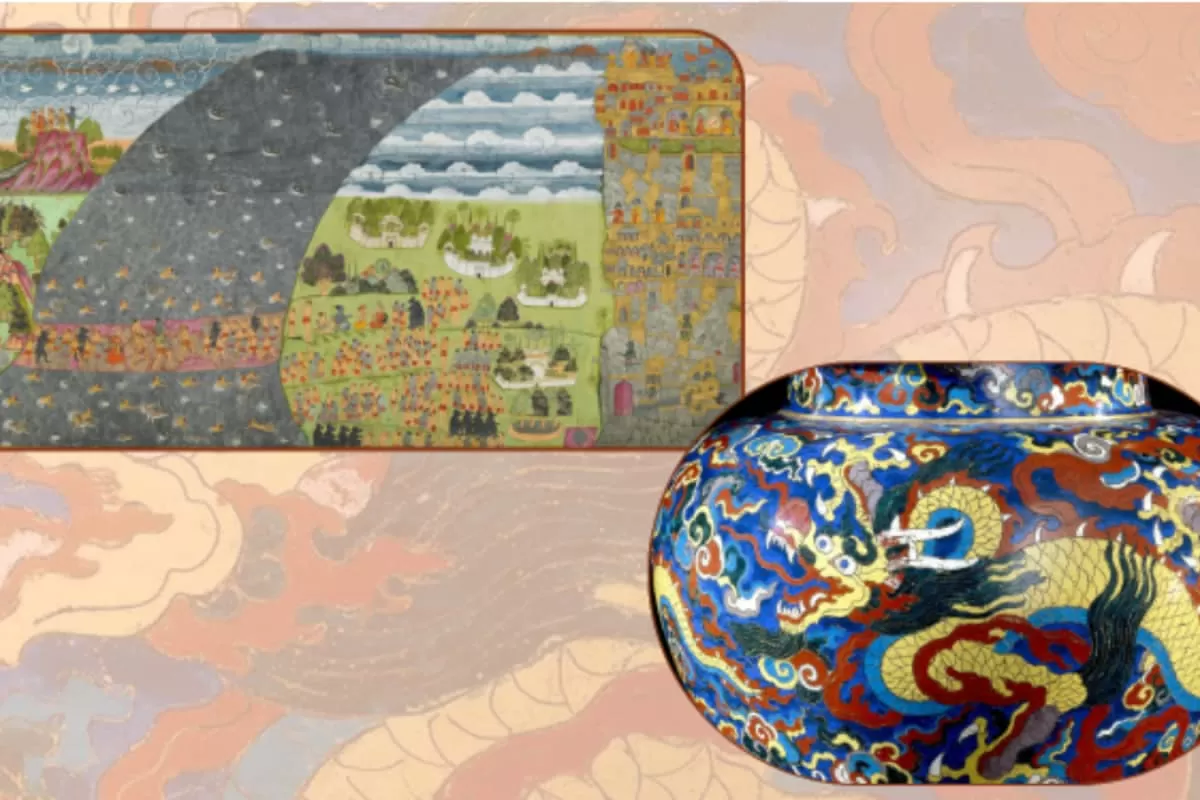
Jodhpur, a city in the Indian state of Rajasthan, is known for its vibrant and intricate paintings. These paintings, also known as Jodhpur paintings, are a reflection of the rich cultural heritage of the city. One of the most striking features of these paintings is the swirling clouds that are often depicted in the background. These clouds not only add a sense of depth and movement to the paintings but also hold a deeper significance. They are a representation of the multiple traditions that have influenced the art of Jodhpur, making it a unique blend of various cultures.
The swirling clouds in Jodhpur paintings are a visual treat, with their sweeping lines and vibrant colors. They are a result of the fusion of different artistic styles and techniques that have been passed down through generations. The influence of Chinese art, via Central Asia, is evident in the sweeping lines that are used to depict the clouds. This can be traced back to the ancient Silk Route, which served as a major trade route between China and India. The Chinese influence can also be seen in the use of delicate brushstrokes and intricate detailing in the paintings.
However, the swirling clouds in Jodhpur paintings are not just a reflection of Chinese influence. They also hold a strong connection to Persian aesthetics. The use of vibrant colors, such as shades of blue, green, and red, is a characteristic feature of Persian art. These colors are used to depict the clouds in Jodhpur paintings, giving them a lively and dynamic appearance. The use of gold and silver in the paintings is also reminiscent of Persian art, which often used these precious metals to add a touch of opulence to their creations.
The fusion of Chinese and Persian influences in Jodhpur paintings is a result of the city’s strategic location. Jodhpur, also known as the “Gateway to Thar”, has been a major trade center since ancient times. It served as a meeting point for traders from different parts of the world, who brought with them their unique cultures and artistic styles. Over time, these influences seeped into the local art and gave birth to the beautiful and distinctive Jodhpur paintings that we see today.
The swirling clouds in Jodhpur paintings not only reflect the city’s diverse cultural influences but also hold a deeper symbolic meaning. In Indian mythology, clouds are often associated with rain, which is considered a symbol of prosperity and abundance. The swirling clouds in Jodhpur paintings, therefore, represent the city’s prosperity and its rich cultural heritage. They are a reminder of the city’s glorious past and its ability to adapt and evolve with changing times.
The intricate and detailed Jodhpur paintings are not just a form of art but also a reflection of the city’s identity. They have been passed down through generations and have become an integral part of the city’s cultural fabric. The swirling clouds in these paintings are a testament to the city’s openness to different cultures and its ability to embrace them while retaining its own unique identity.
In conclusion, the swirling clouds in Jodhpur paintings are not just a beautiful artistic element but also a representation of the city’s rich cultural heritage. They reflect the fusion of Chinese and Persian influences, which have shaped the art of Jodhpur. These paintings are a testament to the city’s vibrant and diverse past and serve as a reminder of its glorious legacy. So, the next time you admire a Jodhpur painting, take a moment to appreciate the swirling clouds and the multiple traditions they echo.
