
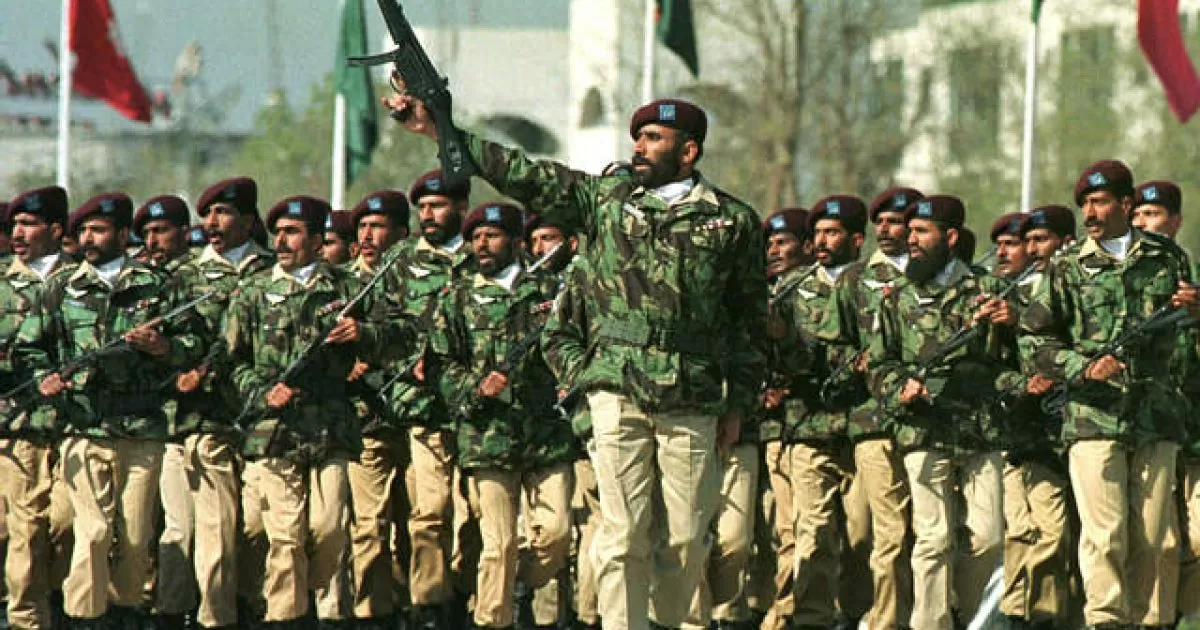
Pakistan and Afghanistan, two neighboring countries that share a long and complicated history, are once again at the center of international attention. The recent declaration by Pakistan that it is in “open war” with Afghanistan’s Taliban government has sparked concerns and raised questions about the future of the region. The tensions between the two countries have been escalating for some time now, with cross-border clashes and disputes over the Durand Line, a border that has been a source of contention between the two nations for decades.
The Durand Line, named after the British diplomat Sir Mortimer Durand who drew it in 1896, has been a source of dispute between Afghanistan and Pakistan since the latter’s independence in 1947. The border, which runs for 2,640 kilometers and divides the Pashtun tribal areas, has never been officially recognized by the Afghan government. This has led to a series of conflicts and clashes between the two countries over the years, with both sides accusing the other of violating the border and supporting militant groups.
However, the recent escalation of tensions between Pakistan and Afghanistan has taken a dangerous turn. The Pakistani government has accused the Afghan Taliban of carrying out attacks on its security forces from across the border, while the Afghan government has accused Pakistan of supporting and sheltering Taliban militants. The situation has become so volatile that Pakistan has declared it is now in “open war” with the Taliban government in Afghanistan.
The decision to declare “open war” was not taken lightly by Pakistan. It came after a series of cross-border clashes and attacks on Pakistani security forces, which resulted in the deaths of several soldiers. Pakistan has long been a victim of terrorism, with various militant groups using its territory to launch attacks on both its own citizens and neighboring countries. The government has taken a strong stance against terrorism and has launched several military operations to eliminate these threats. However, the recent attacks by the Afghan Taliban have pushed Pakistan to take a more aggressive approach.
The declaration of “open war” by Pakistan has been met with mixed reactions from the international community. While some countries have expressed concerns about the escalation of tensions between the two countries, others have shown support for Pakistan’s decision to take a strong stance against terrorism. The United States, which is currently involved in peace talks with the Taliban, has urged both Pakistan and Afghanistan to resolve their differences through dialogue and maintain peace in the region.
The situation in Afghanistan is complex and fragile, with the country still struggling to establish stability after decades of war and conflict. The Taliban, which was ousted from power by the US-led invasion in 2001, has been regaining control in various parts of the country. The Afghan government, on the other hand, has been facing challenges in maintaining control and providing security to its citizens. The ongoing peace talks between the US and the Taliban have raised hopes for a peaceful resolution to the conflict, but the recent tensions with Pakistan have added a new layer of complexity to the situation.
Pakistan’s declaration of “open war” with the Taliban government in Afghanistan is not just a response to recent attacks, but also a message to the international community that it will not tolerate any threats to its sovereignty and security. The country has made significant progress in its fight against terrorism and has sacrificed a lot in terms of both human lives and economic stability. The government is determined to eliminate all forms of terrorism and will not hesitate to take strong measures to protect its citizens and borders.
The declaration of “open war” may seem like a drastic step, but it is a necessary one to ensure the safety and security of the people of Pakistan. The government has also called for international support in its fight against terrorism and has urged the Afghan government to take action against the Taliban militants operating from its territory. It is time for both countries to put aside their differences and work together towards a peaceful and stable region.
In conclusion, the recent declaration of “open war” between Afghanistan and Pakistan has raised concerns and sparked debates about the future of the region. However, it is important to remember that Pakistan’s decision was not taken lightly and is a response to the ongoing threat of terrorism. The country remains committed to its fight against terrorism and will not back down in the face of any challenges. It is time for the international community to support Pakistan in its efforts to maintain peace and stability in the region. Only through cooperation and dialogue can we hope to overcome the challenges and build a better future for both Pakistan and Afghanistan.
