
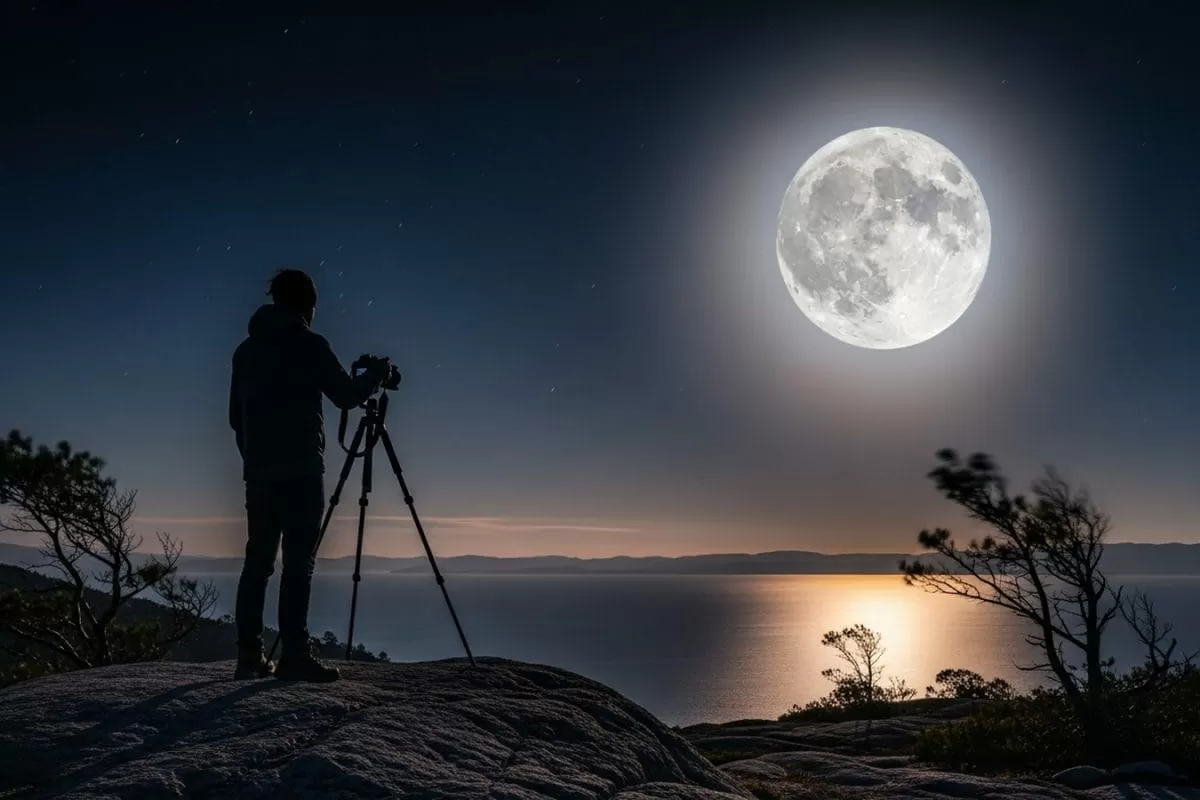
Witnessing a lunar eclipse is truly a remarkable and rare experience. The Moon, Earth’s faithful companion, transforms into a stunning red ball as it passes through the Earth’s shadow. And for photographers, capturing this celestial event can be a challenging yet rewarding task. With the right gear, settings, and timing, you can photograph the Moon’s red glow in all its stunning detail. So, if you’re ready to take your eclipse photography to the next level, here are some tips that will help you elevate your shots.
Gear Up
Before you head out to photograph the lunar eclipse, make sure you have the right gear. The first and most obvious item on your list should be a good camera. While any camera can capture the eclipse, a DSLR or a mirrorless camera will give you better control over the settings and produce higher quality images. Additionally, invest in a sturdy tripod to keep your camera steady during the long exposures required for photographing the eclipse.
Another essential piece of gear is a telephoto lens with a focal length of at least 300mm. This will allow you to get close-up shots of the Moon and capture its details and the surrounding stars. If you don’t have a telephoto lens, you can consider renting one for the occasion.
Settings Matter
The right camera settings are crucial in capturing the Moon’s red glow in all its glory. The eclipse will have different stages, and each stage will require different settings. During the initial stages of a lunar eclipse, when only a small part of the Moon is covered by the Earth’s shadow, you can use a lower ISO (100 or 200) and a faster shutter speed (around 1/250 second) to capture the bright and detailed surface of the Moon.
As the eclipse progresses and the Moon becomes more covered by the Earth’s shadow, you will need to adjust your settings. Increase the ISO gradually to 800 or 1600 and use a slower shutter speed of around 1/15 second to capture the Moon’s red glow. Play around with the aperture as well, as a smaller aperture (higher f-stop) will give you a sharper image of the Moon.
Timing is Everything
Timing is crucial when photographing a lunar eclipse. It’s essential to know the timing of the different stages of the eclipse so that you can plan and be in the right place at the right time. You can find the schedule for a lunar eclipse online or through various astronomy apps. It’s also helpful to scout your location beforehand to find the best spot to set up your equipment and have a clear view of the Moon.
One of the most critical moments of a lunar eclipse is the totality phase when the Moon is entirely covered by the Earth’s shadow. This is when the Moon turns a deep red color and is the perfect time to capture it in all its glory. Use a slower shutter speed (1/15 to 1/4 second) and a higher ISO (1600 to 3200) to capture the Moon’s stunning red hue.
Experiment and Be Creative
Don’t be afraid to experiment with different camera settings and techniques to capture unique and creative shots. Try using a long exposure to capture the Moon’s movement during the eclipse or create a time-lapse video of the entire event. You can also include other elements in your shots, such as a silhouette of a tree or building, to add depth and interest to your images.
Take Advantage of the Environment
The lunar eclipse itself is a beautiful sight, but you can also take advantage of the surrounding environment to elevate your shots. Incorporate elements such as a city skyline, a landscape, or a body of water in your photos to add context and create stunning compositions.
In conclusion, capturing the Moon’s red glow during a lunar eclipse is a challenging yet incredibly rewarding experience. With the right gear, settings, and timing, you can capture stunning images that will leave you and your audience in awe. So, gear up, plan your shots, and get ready to elevate your eclipse photography to new heights. Happy shooting!
