
Varanasi, also known as Banaras or Kashi, is one of the oldest and most sacred cities in India. It is a city that embodies the rich culture and traditions of Hinduism. Among the many festivals celebrated in Varanasi, one of the most unique and significant ones is Masan Holi. This festival is celebrated at the ancient Manikarnika Ghat, which is considered to be one of the most famous and important cremation sites in Hinduism.
Holi, the festival of colors, is celebrated with great enthusiasm and joy all over India. But in Varanasi, the celebration of Holi is different. Masan Holi is a unique way of celebrating this festival, which has been a tradition in Varanasi for centuries. This festival is an amalgamation of devotion, spirituality, and colors. It is celebrated on the first day of the Hindu lunar month of Chaitra, which usually falls in the month of March.
Manikarnika Ghat is located on the banks of the holy river Ganges and is considered to be one of the oldest and most sacred Ghats in Varanasi. It is believed that Lord Shiva himself had created this Ghat. According to Hindu mythology, it is the place where Lord Shiva and his consort, Goddess Parvati, had taken bath before bestowing immortality on their devotees. The word ‘Manikarnika’ is derived from the words ‘Mani’ meaning ‘jewel’ and ‘Karnika’ meaning ‘ear ornament’. It is believed that one’s wishes are fulfilled if they take a dip in the holy waters of Manikarnika Ghat.
On the day of Masan Holi, the atmosphere at Manikarnika Ghat is filled with vibrant colors and a sense of devotion. Devotees gather in large numbers to celebrate this festival. The Ghat is adorned with colorful flowers, rangolis, and diyas (lamps). The priests perform special rituals and prayers to mark the beginning of Masan Holi.
The highlight of Masan Holi is the ‘Holi Poojan’ or the worship of Lord Shiva and Goddess Parvati. Devotees offer prayers and perform the holy rituals while the priests chant mantras and perform aarti (ritual of waving lights) to seek the blessings of the divine couple. After the pooja, the idols of the deities are smeared with vibrant colors, marking the start of the colorful festivities.
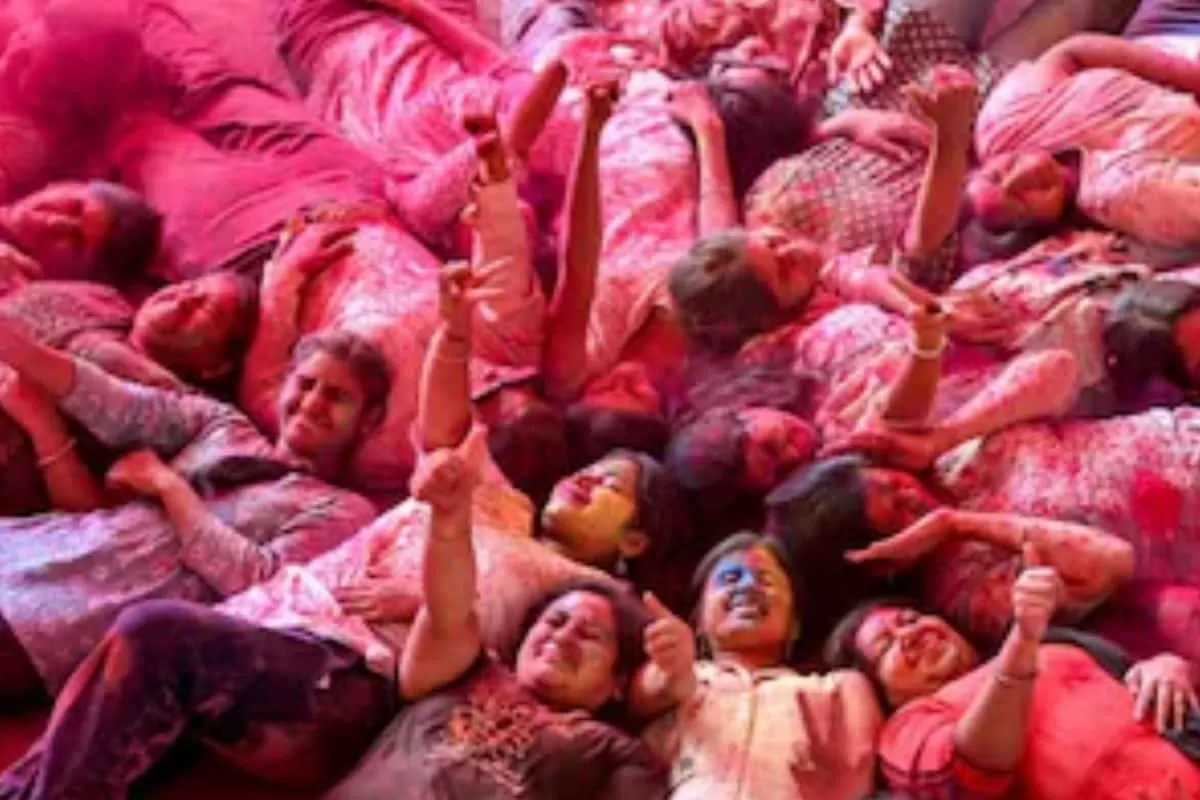
After the pooja, the devotees take part in the traditional ‘Holi Mai Khelna’ ritual. In this ritual, devotees play Holi by applying colors on each other’s faces and clothes. The atmosphere is filled with laughter, joy, and camaraderie as people of all ages participate in this joyful celebration. The colors used in Masan Holi are made from natural ingredients like kesariya (saffron), haldi (turmeric), and gulal (rose petals). These colors are believed to have medicinal and spiritual benefits.
The celebration of Masan Holi at Manikarnika Ghat also serves as a reminder of the cycle of life and death. The Ghat is not only a place for cremation but also a place to celebrate the journey of the departed soul into the afterlife. It is a beautiful and unique way of remembering our loved ones and celebrating their life.
Apart from the colorful festivities, Masan Holi is also a time for spiritual reflection and introspection. It is a time to let go of past grudges and start afresh with a pure heart. People from all walks of life, regardless of caste, creed, or social status, come together to celebrate Masan Holi, making it a symbol of unity and brotherhood.
Masan Holi at Manikarnika Ghat is not just a festival, but a way of life for the people of Varanasi. It is a celebration of the rich culture and traditions of Hinduism that have been passed down for generations. The colorful festivities, the spiritual rituals, and the sense of togetherness make Masan Holi a truly unforgettable experience.
In today’s fast-paced world, where traditions and cultural values are slowly fading away, the celebration of Masan Holi at Manikarnika Ghat is a beautiful reminder of the importance of our roots and heritage. It is a celebration that not only
