
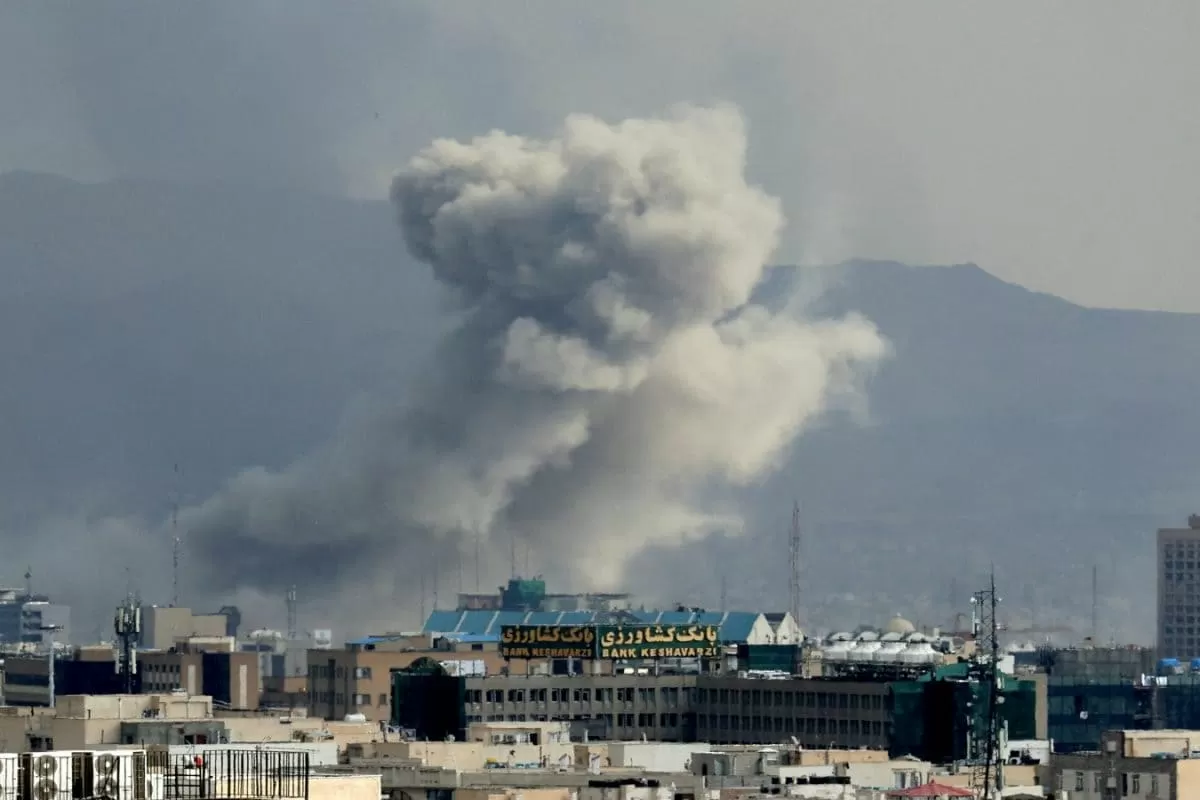
The recent strikes by the United States and Israel on Iranian targets, and the subsequent retaliatory response by Tehran, have caused a surge of tension in the Middle East. The situation has escalated to a point where it has paralyzed shipping through the vital Strait of Hormuz, a key waterway for global oil shipments. This development has sent shockwaves through the international community and has raised concerns about the stability of the region.
The United States and Israel have long been at odds with Iran over its nuclear program and its support for militant groups in the region. Tensions have been simmering for years, but the recent strikes have brought the conflict to a new level. The US and Israeli strikes, which were carried out without the approval of the United Nations, have been condemned by many countries as a violation of international law. However, both nations have justified their actions as a necessary measure to protect their national security.
The strikes have had a significant impact on Iran, both politically and economically. The Iranian government has responded with strong rhetoric, vowing revenge against the US and Israel. This has raised concerns about the possibility of a full-scale war in the region. Moreover, the Iranian economy, which heavily relies on oil exports, has been severely affected by the disruption of shipping through the Strait of Hormuz. The uncertainty and instability caused by these events have also led to a sharp decline in foreign investments in Iran.
The Strait of Hormuz, located between Iran and Oman, is a crucial waterway for global oil shipments. It is estimated that around 20% of the world’s oil supply passes through this narrow strait. Any disruption in shipping through this area could have a significant impact on the global economy, leading to a rise in oil prices and affecting the energy needs of many countries. The recent events have already caused a spike in oil prices, and if the situation escalates further, the consequences could be dire.
The tensions in the region have also had a ripple effect on other countries. The United Arab Emirates, a key ally of the US and a major oil producer, has expressed concerns about the situation and has called for a diplomatic resolution. Other countries in the region, such as Saudi Arabia and Qatar, have also been closely monitoring the developments and have urged all parties to exercise restraint.
In the midst of this crisis, it is essential for all parties involved to prioritize diplomacy and work towards a peaceful resolution. The use of military force will only lead to further escalation and instability in the region. It is crucial for the international community to come together and find a peaceful solution to this conflict.
Moreover, the disruption of shipping through the Strait of Hormuz has highlighted the need for alternative routes for oil shipments. This incident serves as a wake-up call for countries to diversify their energy sources and reduce their dependence on the Strait of Hormuz. This could also lead to a more balanced distribution of global energy resources, reducing the risk of similar incidents in the future.
In conclusion, the US and Israeli strikes on Iran and the subsequent response by Tehran have widened regional tensions and caused a paralysis of shipping through the Strait of Hormuz. This situation has raised concerns about the stability of the region and its impact on the global economy. It is crucial for all parties to prioritize diplomacy and work towards a peaceful resolution to prevent further escalation. The incident also serves as a reminder for countries to diversify their energy sources and reduce their dependence on the Strait of Hormuz. Let us hope that through dialogue and cooperation, we can find a peaceful solution to this crisis and bring stability to the region.
