
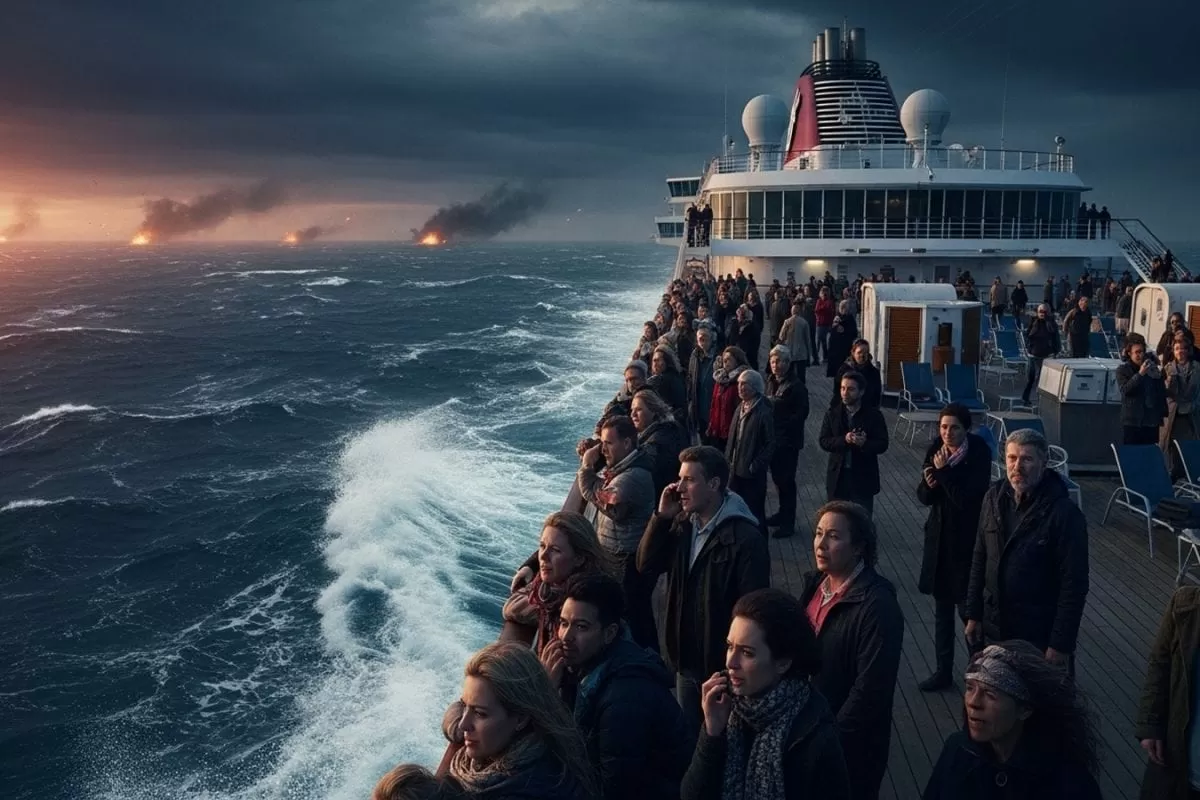
With the Strait of Hormuz blocked and airspace shut, thousands of cruise passengers from around the world remain stranded in Gulf ports as tensions continue to rise. The current situation has not only caused inconvenience for these travelers, but has also disrupted the booming cruise industry in the Gulf region.
The Strait of Hormuz, located between the Persian Gulf and the Gulf of Oman, is a crucial waterway for global shipping and trade. It is estimated that almost one-fifth of the world’s oil supply passes through this narrow strait. However, recent conflict and tension between Iran and the United States have led to heightened security in the area, resulting in the closure of this vital sea route.
This closure has left many cruise ships unable to navigate through the strait, forcing them to remain stranded in the Gulf ports. A spokesperson for a major cruise line stated that, “The safety and security of our passengers and crew is our top priority. With the Strait of Hormuz blocked, we are unable to continue with our scheduled itineraries.”
As a result, thousands of passengers, many of whom had been eagerly anticipating their cruise vacation, now find themselves stuck in the Gulf ports. For many, this has been a major inconvenience and has disrupted their travel plans. With limited options for alternative means of transportation, these passengers are left with no choice but to wait until the situation improves.
The impact of this closure extends beyond the passengers, as it has dealt a significant blow to the cruise industry in the Gulf region. The Gulf region has emerged as a popular destination for cruise vacations in recent years, offering travelers a unique blend of modern and traditional culture, as well as stunning landscapes and luxury amenities. However, with ships unable to navigate through the Strait of Hormuz, the future of this growing industry is uncertain.
Despite these challenges, cruise lines and authorities in the Gulf region have been working together to ensure the safety and comfort of the stranded passengers. Temporary accommodations have been provided, and efforts have been made to keep the passengers entertained during their unexpected extended stay. The passengers have also been assured that they will be updated as the situation develops, and necessary arrangements will be made to ensure their safe return home.
Furthermore, efforts are being made at the diplomatic level to resolve the tensions and reopen the Strait of Hormuz. The cruise industry is an important source of revenue and employment in the Gulf region and the closure of the shipping route has had a significant economic impact. Therefore, it is in the interest of all parties to find a peaceful resolution to the current situation.
Despite the uncertainty and challenges, the stranded passengers have remained positive and understanding. Many have taken the unexpected changes in their stride, using it as an opportunity to explore the local culture and attractions. Cruise lines have also been praised for their quick and efficient handling of the situation, showing care and compassion for their passengers’ well-being.
In the face of adversity, the resilience and positive attitude of the passengers and the cruise industry is a testament to the human spirit. It also serves as a reminder that in times of crisis, it is important to remain united and work towards finding a peaceful resolution.
As tensions in the Gulf region continue to escalate, it is hoped that a solution will be reached soon, allowing the stranded cruise passengers to continue on their journey and the cruise industry to resume its operations smoothly. Until then, let us all remain positive and hopeful for the safety and well-being of those affected by this unfortunate situation.
