
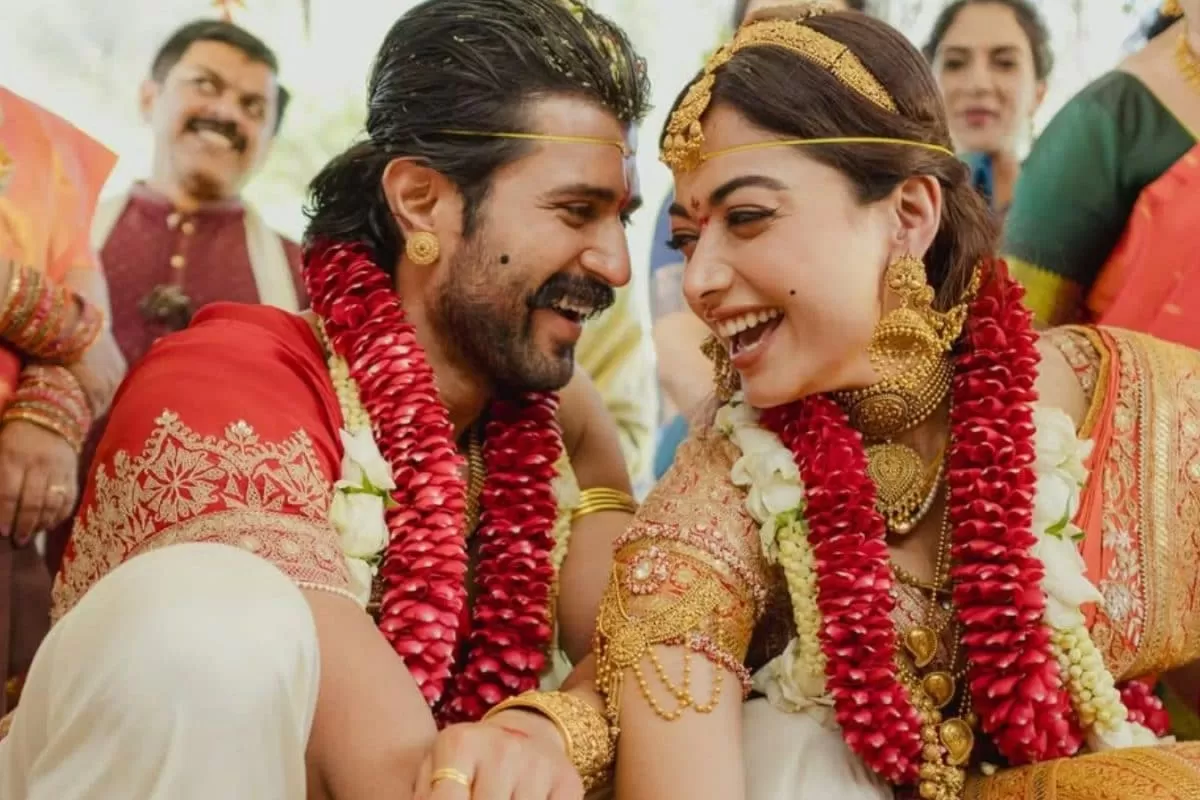
Rashmika Mandanna, the popular South Indian actress, has been making waves in the media recently for her stunning bridal look. But what truly caught everyone’s attention was her choice of jewellery – temple jewellery. As soon as her wedding pictures were released, the internet went abuzz with admiration for her traditional yet glamorous style. This has reignited interest in temple jewellery, a heritage style defined by Nakashi craftsmanship, sacred motifs, and heirloom value.
Temple jewellery, also known as ‘Kempu’ jewellery, has been a part of South Indian culture for centuries. It gets its name from its association with temples, where it was initially used to adorn the idols of deities. Over time, it became a popular choice for brides, especially in the states of Tamil Nadu, Karnataka, and Andhra Pradesh. The intricate designs, rich heritage, and spiritual significance make it a sought-after choice for weddings and other auspicious occasions.
What sets temple jewellery apart from other styles is its unique craftsmanship. The pieces are handcrafted by skilled artisans using the Nakashi technique, a traditional method of goldsmithing that involves intricate filigree work. This technique was passed down from generation to generation and is still practiced by a few selected families. The attention to detail and precision in creating each piece is what makes them truly exceptional.
Another defining feature of temple jewellery is the use of sacred motifs. Each piece is adorned with symbols and designs that hold deep spiritual significance. For instance, the ‘Lakshmi’ motif, which represents wealth and prosperity, is often seen in temple jewellery. Other popular motifs include peacocks, lotus, and elephants, which are associated with various Hindu deities and symbolize different virtues. These motifs not only add a religious touch to the jewellery but also make them meaningful and special for the wearer.
One of the reasons why temple jewellery has stood the test of time is its heirloom value. These pieces are not just accessories; they are treasured possessions that are passed down from one generation to the next. Many families have temple jewellery pieces that have been in their possession for decades, and they hold sentimental value for them. The intricate designs, precious metals, and use of precious gemstones make these pieces timeless and valuable, making them a great investment.
Rashmika Mandanna’s bridal look has once again brought temple jewellery into the limelight. Her choice to wear traditional temple jewellery on her big day has inspired many brides-to-be to opt for this style. The actress herself has been a vocal advocate for promoting traditional Indian culture and has even been seen sporting temple jewellery in her movies. Her recent wedding has only reinforced her love for this heritage style.
The resurgence of temple jewellery has also caught the attention of many fashion designers and stylists. They have been incorporating temple jewellery into their collections, giving it a modern twist and making it more accessible to a wider audience. This has not only helped in preserving this traditional art form but has also given it a fresh and contemporary appeal.
In conclusion, Rashmika Mandanna’s bridal look has reignited interest in temple jewellery, and rightly so. This heritage style, with its intricate craftsmanship, sacred motifs, and heirloom value, is a true representation of South Indian culture. It is heartening to see this traditional art form being embraced and celebrated in the modern world. Let us hope that this trend continues, and temple jewellery remains an integral part of our culture for generations to come.
