
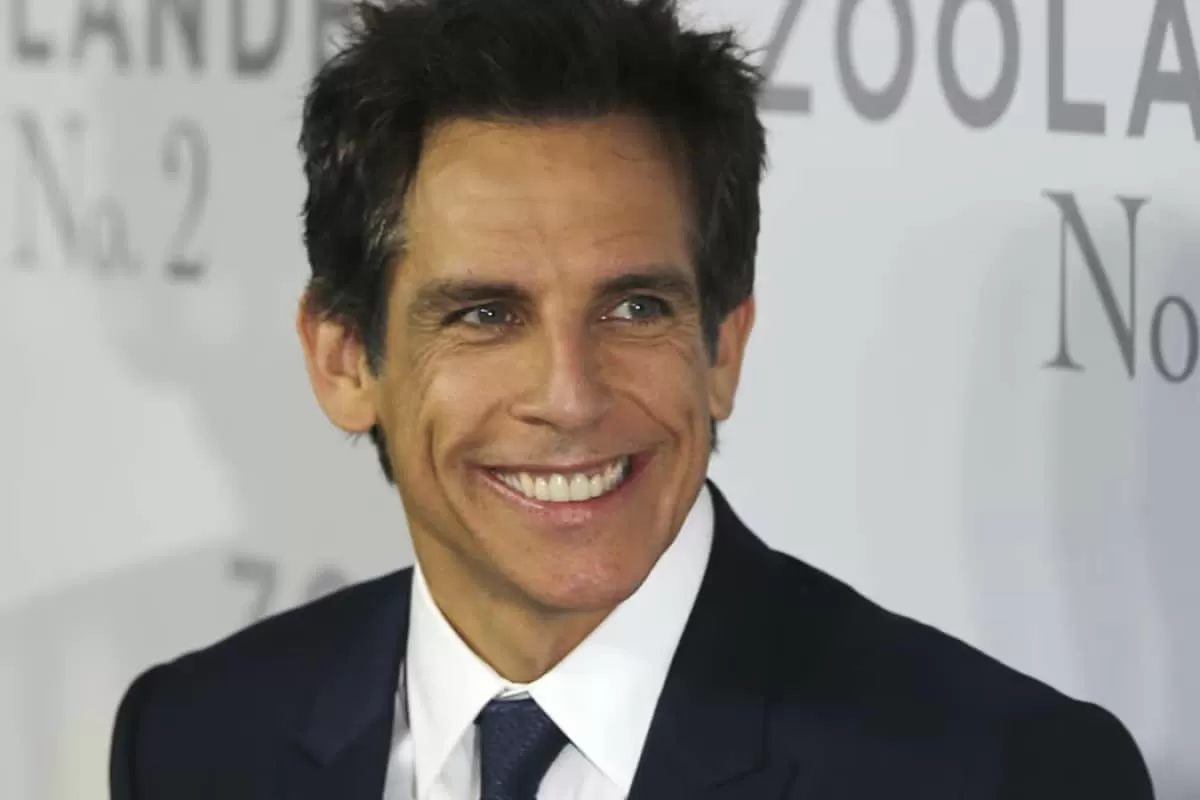
The White House recently made headlines when it posted footage of military strikes on Iran, along with clips from movies and video games. While some hailed the footage as a display of strength and power, others were quick to criticize the use of entertainment media in such a serious and sensitive situation. One of those voices of criticism came from actor, director, and producer Ben Stiller, who called out the inclusion of a clip from his movie ‘Tropic Thunder’.
For those who are not familiar, ‘Tropic Thunder’ is a satirical comedy that pokes fun at the Hollywood film industry and the stereotypes often perpetuated in war and action movies. Stiller, who directed and starred in the movie, took to Twitter to express his dismay at seeing his work being used in the context of real-life military strikes.
In a tweet, Stiller stated, “Turns out the ‘Tropic Thunder’ scene of the fake movie ‘Simple Jack’ being used to motivate soldiers in the real war is not as far-fetched.” He went on to say, “It’s disappointing to see the White House resorting to using movie footage to showcase military action. These are real lives at stake, not a Hollywood blockbuster.”
Stiller’s words struck a chord with many, and it’s easy to see why. In a time of heightened tensions and fear of potential war, the use of entertainment media in a serious situation like this can seem both insensitive and irresponsible. It raises questions of ethics and the line between reality and fiction.
However, it’s important to note that Stiller’s criticism was not aimed solely at the use of the ‘Simple Jack’ clip. He also expressed concern about the use of video game footage, specifically from the game Call of Duty. The White House’s video, which was shared on President Trump’s Twitter account, included a short clip from the game that showed a sniper taking out an enemy soldier. This led many to question the appropriateness of using a game that glamorizes war and violence to promote an actual military attack.
The White House has not responded to Stiller’s criticism or the backlash from others who have raised similar concerns. However, it’s worth considering the message that is being sent by including these clips in the video. Is it promoting violence as a means of conflict resolution? Is it trivializing the seriousness of the situation by using entertainment as a propaganda tool? These are valid questions that need to be addressed.
On the other hand, some may argue that the use of movie and game footage is simply a way to engage a wider audience and make the information more digestible for the general public. In a world where social media plays a significant role in shaping public opinion, it’s not surprising that the White House turned to popular media to share its message.
But regardless of the intention, the use of entertainment media in this context can have unintended consequences. It can perpetuate harmful stereotypes and glorify violence, which is not a message that should be associated with the actions of our military.
In the end, it’s important to remember that war is not a game or a movie. It’s a serious and devastating reality that affects real people and their families. Using entertainment media to showcase military strikes may be an attempt to appeal to a wider audience, but it also runs the risk of trivializing the gravity of the situation.
As for Ben Stiller, his criticism was a reminder that even in moments of high tension and conflict, we should not lose sight of the impact our words and actions can have. As artists and creators, we have a responsibility to use our platforms for good, to promote empathy and understanding, and to challenge the status quo. And that is something that should be celebrated and encouraged, no matter where or when it arises.
