
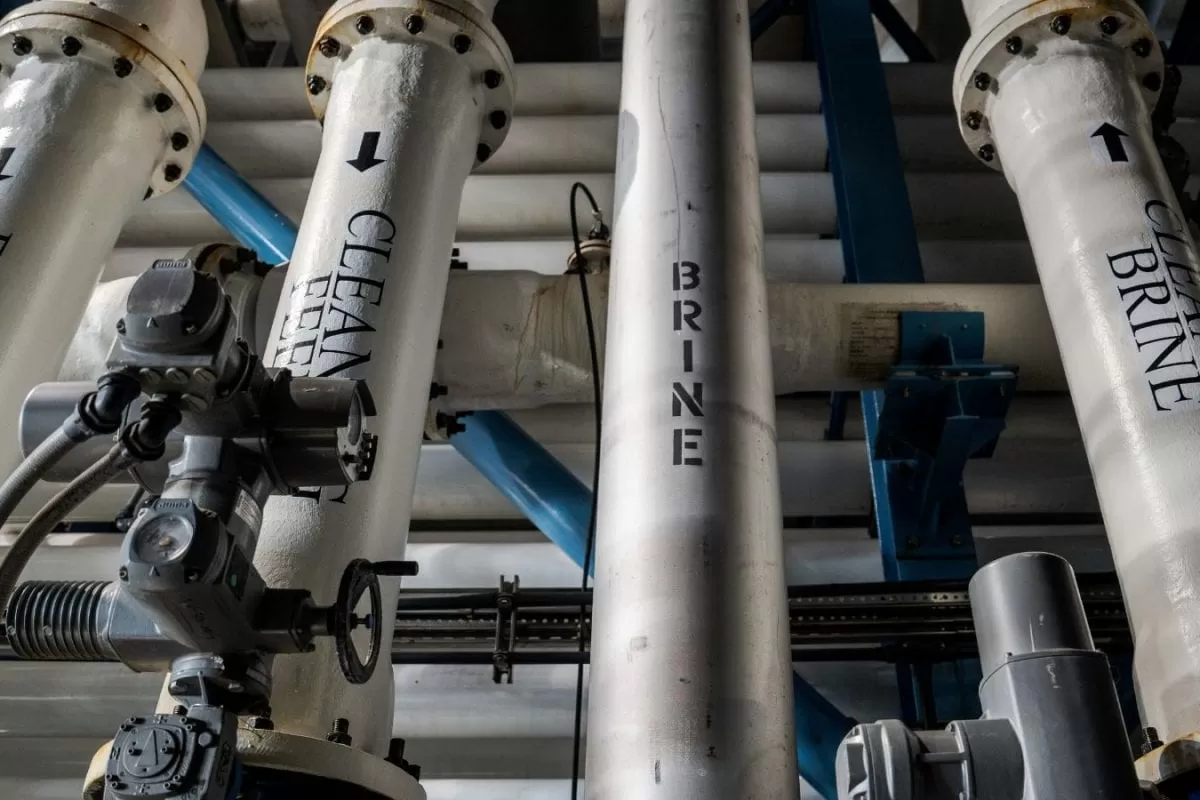
The ongoing conflict between the United States, Israel, and Iran has raised concerns not only about the potential for a full-scale war but also about the impact it could have on the global water crisis. With water scarcity becoming an increasingly pressing issue, the importance of water desalination plants cannot be overstated. In this article, we will explore what these plants are, why they are crucial, and how attacks on them could exacerbate the already dire situation. We will also take a look at where India stands in the global water crisis and what steps can be taken to address this urgent issue.
Water desalination plants, as the name suggests, are facilities that remove salt and other minerals from seawater, making it safe for human consumption and other uses. With more than 70% of the Earth’s surface covered in water, it may seem like there is an endless supply of this vital resource. However, only 2.5% of that water is freshwater, and most of it is locked in glaciers and polar ice caps, leaving less than 1% available for human use. This is where desalination plants play a crucial role.
These plants use various methods such as reverse osmosis, multi-stage flash distillation, and electrodialysis to remove salt and other impurities from seawater, making it suitable for drinking, irrigation, and industrial use. The process is energy-intensive and expensive, but with the advancement of technology, the cost has significantly reduced, making it a viable solution for water-scarce regions.
So, why are these plants so important? The answer lies in the fact that freshwater sources are depleting at an alarming rate. Climate change, population growth, and unsustainable water management practices have all contributed to this crisis. According to the World Health Organization, by 2025, half of the world’s population will be living in water-stressed areas. This means that millions of people will not have access to clean water, leading to a host of health and social issues.
In the context of the US-Israel-Iran conflict, the importance of water desalination plants becomes even more significant. The Middle East is already one of the most water-stressed regions in the world, and any attack on these plants could have catastrophic consequences. For instance, Israel, a small country with limited freshwater sources, relies heavily on desalination plants to meet its water needs. In the event of a war, these plants could become targets, disrupting the water supply and exacerbating the already tense situation.
Similarly, Iran, which is facing its own water crisis, is also heavily dependent on desalination plants. Any damage to these plants could further strain the already strained relationship between Iran and the US, leading to a vicious cycle of conflict and water scarcity.
The impact of attacks on desalination plants is not limited to the Middle East. With the global water crisis worsening, any disruption in the supply of freshwater could have far-reaching consequences. For instance, countries like India, which is already facing severe water scarcity, could be severely affected. India is the second-most populous country in the world, and its rapidly growing population has put immense pressure on its water resources. According to a recent report by NITI Aayog, a government think tank, 21 Indian cities will run out of groundwater by 2020, affecting approximately 100 million people. In such a scenario, any disruption in the supply of freshwater could have disastrous consequences.
India’s stance in the global water crisis is crucial. The country has the highest number of people without access to safe drinking water, with over 163 million people lacking access to clean water. The government has taken steps to address this issue, such as the Jal Shakti Abhiyan, which aims to conserve water and improve water management practices. However, more needs to be done, and the current political climate calls for urgent action.
In conclusion, water desalination plants play a critical role in addressing the global water crisis. With the US-Israel-Iran conflict escalating, any attack on these plants could have dire consequences, not only for the region but also for the rest of the world. India, being one of the most water-stressed countries, must take proactive measures to address this issue. The time to act is now, and every individual, government, and organization must come together to find sustainable solutions to the water crisis. As Mahatma Gandhi famously said, “Earth provides enough to satisfy
