
Iran, a country known for its rich history and cultural heritage, has recently made headlines with its latest move. On Monday, the Islamic Republic fired its first missiles towards Israel, a move that has sparked global attention and raised concerns about the stability of the region.
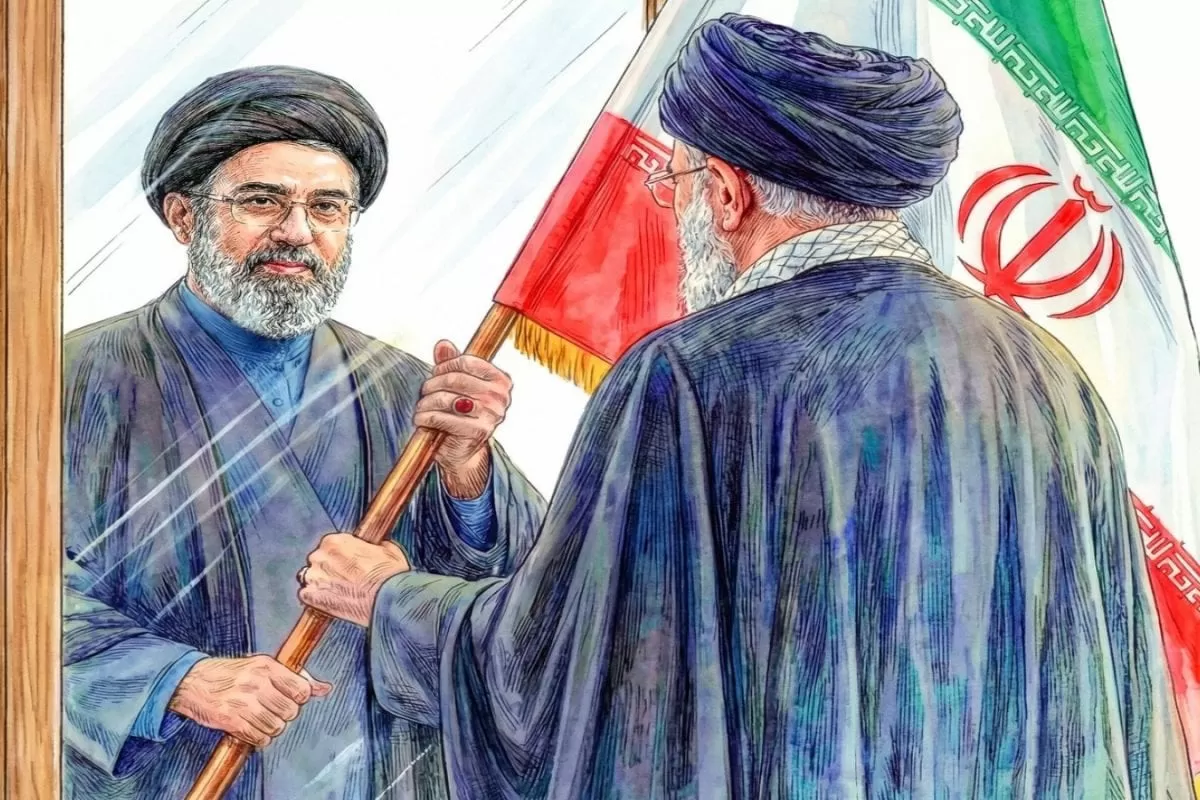
The missile launch came just days after the appointment of Ayatollah Mojtaba Khamenei as the new supreme leader of Iran. This move has been seen as a significant shift in the country’s political landscape and has raised questions about the future of Iran’s relationship with its neighboring countries.
The appointment of Ayatollah Mojtaba Khamenei, the son of the late Ayatollah Ali Khamenei, has been met with mixed reactions both within Iran and internationally. While some see it as a continuation of the country’s conservative policies, others view it as a potential opportunity for change and progress.
The missile launch, which was carried out by the Islamic Revolutionary Guard Corps (IRGC), has been described as a show of strength and a warning to Israel. The IRGC stated that the missiles were aimed at military bases in the Golan Heights, a disputed territory between Israel and Syria.
This move has been met with condemnation from Israel and its allies, who have called it a provocative and dangerous act. However, Iran has defended its actions, stating that it was a response to Israel’s recent attacks on Iranian military bases in Syria.
The timing of the missile launch, just days after the appointment of Ayatollah Mojtaba Khamenei, has raised questions about the new leader’s stance on foreign policy. Many are wondering if this is a sign of a more aggressive approach towards Israel and other countries in the region.
However, it is important to note that Iran has always maintained that its missile program is purely defensive and that it has no intention of using it for offensive purposes. The country has also stated that it has the right to defend itself against any external threats.
The appointment of Ayatollah Mojtaba Khamenei as the new supreme leader has also been seen as a sign of continuity in Iran’s political system. The late Ayatollah Ali Khamenei was a highly influential figure in the country and his son is expected to follow in his footsteps.
Many experts believe that Ayatollah Mojtaba Khamenei’s appointment will not bring about any significant changes in Iran’s policies, especially when it comes to its relationship with Israel. However, some are hopeful that the new leader may bring about some positive changes in the country’s domestic policies.
Iran has been facing economic challenges in recent years, with sanctions imposed by the United States and other countries taking a toll on its economy. Many Iranians are hoping that the new leader will focus on improving the country’s economy and addressing the needs of its people.
The missile launch towards Israel has also raised concerns about the stability of the region. The ongoing conflicts in Syria and Yemen, as well as the tensions between Iran and its neighboring countries, have already created a volatile situation in the Middle East.
It is crucial for all parties involved to exercise restraint and engage in dialogue to prevent further escalation of tensions. The international community must also play a role in promoting peace and stability in the region.
In conclusion, the recent missile launch by Iran towards Israel has sparked global attention and raised questions about the country’s future under its new supreme leader. While some see it as a sign of aggression, others view it as a show of strength and a warning to its enemies.
It is important for all parties to approach this situation with caution and work towards finding peaceful solutions to the ongoing conflicts in the region. Iran, as a major player in the Middle East, has a crucial role to play in promoting stability and peace in the region. Let us hope that the new leadership will bring about positive changes and work towards a better future for Iran and its people.
