
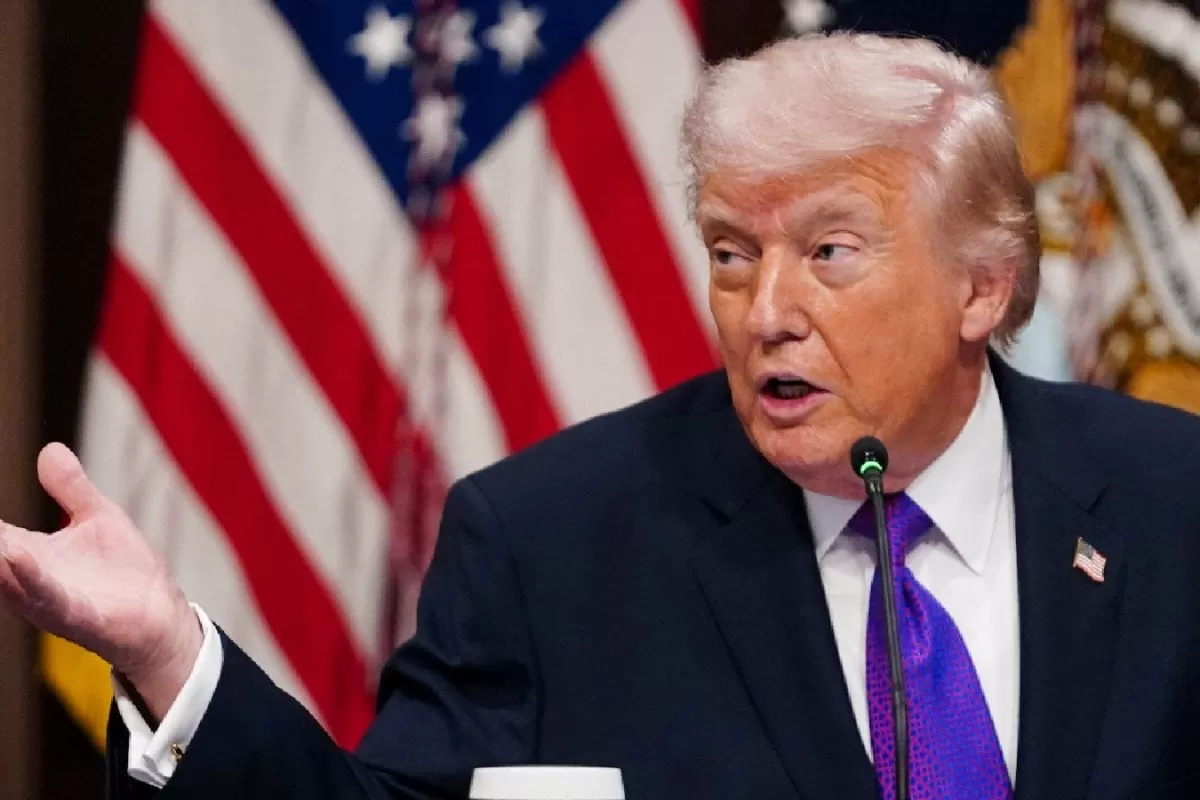
In a recent interview with CBS News on March 9, President Donald Trump made a bold statement regarding the United States’ energy security. He stated that he is considering “taking over” a major waterway in order to secure energy supplies for the country. This statement has caused quite a stir, with many questioning the feasibility and legality of such a move. So, the question remains – can President Trump actually take over a waterway to secure energy supplies?
Firstly, let’s understand what waterway President Trump is referring to. The waterway in question is the Strait of Hormuz, a narrow passage between the Persian Gulf and the Gulf of Oman. It is a vital shipping route for the global oil trade, with nearly 20% of the world’s oil passing through it. The strait is also crucial for the energy supplies of many countries, including the United States.
In the interview, President Trump mentioned that he is considering taking over the strait to ensure that the US has control over the flow of oil and to protect its energy security. This statement has raised concerns and criticism from many, with some even calling it an act of war. However, it is essential to note that the US already has a significant presence in the region with its Fifth Fleet stationed in Bahrain to ensure the safety and security of the waterway.
Now, the question remains – can President Trump legally take over the Strait of Hormuz? The answer is no. The strait falls under the jurisdiction of Iran and Oman, and any attempt by the US to take control of it would be a violation of international law. The United Nations Convention on the Law of the Sea (UNCLOS) clearly states that “all ships, regardless of nationality, enjoy the right of transit passage” through the strait. This means that any country, including the US, cannot claim ownership or control over the strait.
Moreover, any attempt to take over the strait would lead to severe consequences. It could escalate tensions in the region, leading to a potential conflict with Iran, which would have disastrous consequences for the global economy. The US would also face backlash from other countries, especially those heavily reliant on the oil that passes through the strait.
President Trump’s statement about taking over the Strait of Hormuz can be seen as a negotiation tactic. It is no secret that the US has been at odds with Iran, and President Trump has been vocal about his desire to renegotiate the nuclear deal with Iran. By making such a statement, he is sending a strong message to Iran and other countries that the US is willing to do whatever it takes to protect its energy supplies.
In conclusion, while President Trump’s statement about taking over the Strait of Hormuz may have caused some controversy, it is unlikely that he can actually do so. The strait falls under the jurisdiction of Iran and Oman, and any attempt to take control of it would be a violation of international law. It is essential for the US to find diplomatic solutions to ensure its energy security rather than resorting to aggressive actions. As a global leader, the US must lead by example and uphold international laws and norms.
