
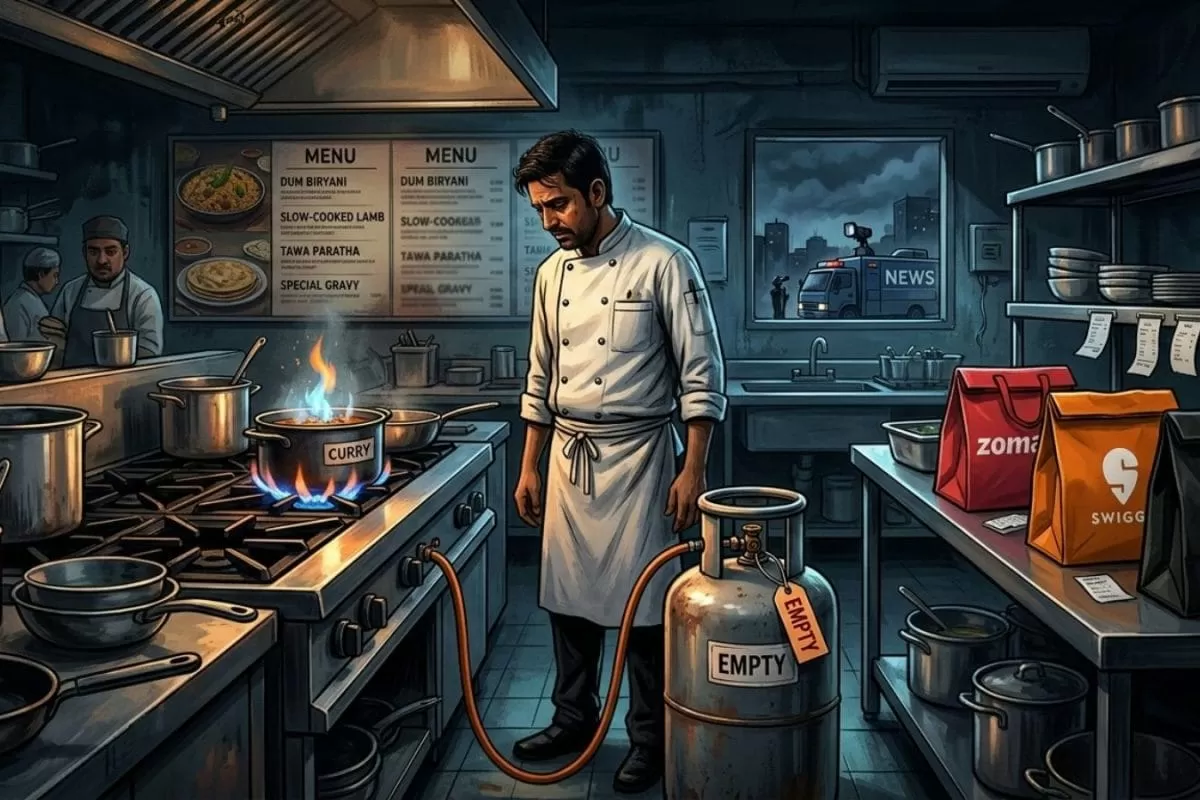
The hospitality industry in India is facing a major crisis as black-market prices for commercial cylinders have hit a staggering ₹2,500. This unprecedented increase in prices has sent shockwaves throughout the industry and has raised concerns about the future of many businesses. The industry is now warning of a “catastrophic” wave of permanent shutdowns if the situation is not addressed immediately.
The sudden surge in prices is a result of the recent shortage of commercial cylinders in the market. This shortage has been caused by the restrictions on the supply of cylinders to commercial establishments by the government. While this measure was taken to ensure the availability of cylinders for domestic use, it has had a devastating impact on the hospitality industry.
The hospitality industry, which includes hotels, restaurants, and caterers, heavily relies on commercial cylinders for their daily operations. These cylinders are essential for cooking, heating, and other tasks in the kitchen. With the current shortage and exorbitant prices, many businesses are struggling to keep their operations running.
The increase in prices has come as a major blow to the already struggling industry, which has been hit hard by the COVID-19 pandemic. Many businesses were just starting to recover from the impact of the pandemic when this new crisis hit. The industry has been struggling to survive for over a year now, and this recent development has made the situation even more dire.
The hospitality industry is a major contributor to the Indian economy, providing employment to millions of people and contributing significantly to the country’s GDP. The sudden increase in prices of commercial cylinders has put the livelihoods of many at risk. With businesses facing the threat of permanent shutdowns, the impact on the economy will be significant.
The situation has become so dire that industry experts are now warning of a “catastrophic” wave of permanent shutdowns if the issue is not resolved soon. Many businesses are already on the brink of collapse, and the increase in prices has only added to their financial burden. The industry is pleading with the government to take immediate action to address this crisis before it’s too late.
The hospitality industry is not only facing the challenge of increased prices, but they are also struggling with the availability of cylinders. Many businesses are unable to procure the required number of cylinders, which is hindering their operations. The industry is urging the government to increase the supply of cylinders to commercial establishments to ensure that businesses can continue to operate smoothly.
The industry is also calling for a reduction in the prices of commercial cylinders to make them more affordable for businesses. The current prices are not sustainable for the industry, and it is imperative that the government takes steps to bring them down to a reasonable level.
The hospitality industry has always been resilient and has faced many challenges in the past. However, the current situation is unprecedented, and businesses are struggling to survive. The industry is hopeful that the government will take immediate action to resolve this crisis and provide relief to the struggling businesses.
In the meantime, the industry is also exploring alternative solutions to overcome this challenge. Many businesses are looking into using alternative sources of fuel and energy, such as electric or induction stoves, to reduce their dependence on commercial cylinders. This could also have a positive impact on the environment by reducing carbon emissions.
The hospitality industry is a vital part of the Indian economy, and it is crucial that the government takes immediate action to address this crisis. The increase in prices of commercial cylinders has put the industry in a precarious situation, and urgent measures need to be taken to prevent a catastrophic wave of permanent shutdowns. The industry is hopeful that with the government’s intervention, they will be able to overcome this challenge and continue to contribute to the country’s growth and development.
