
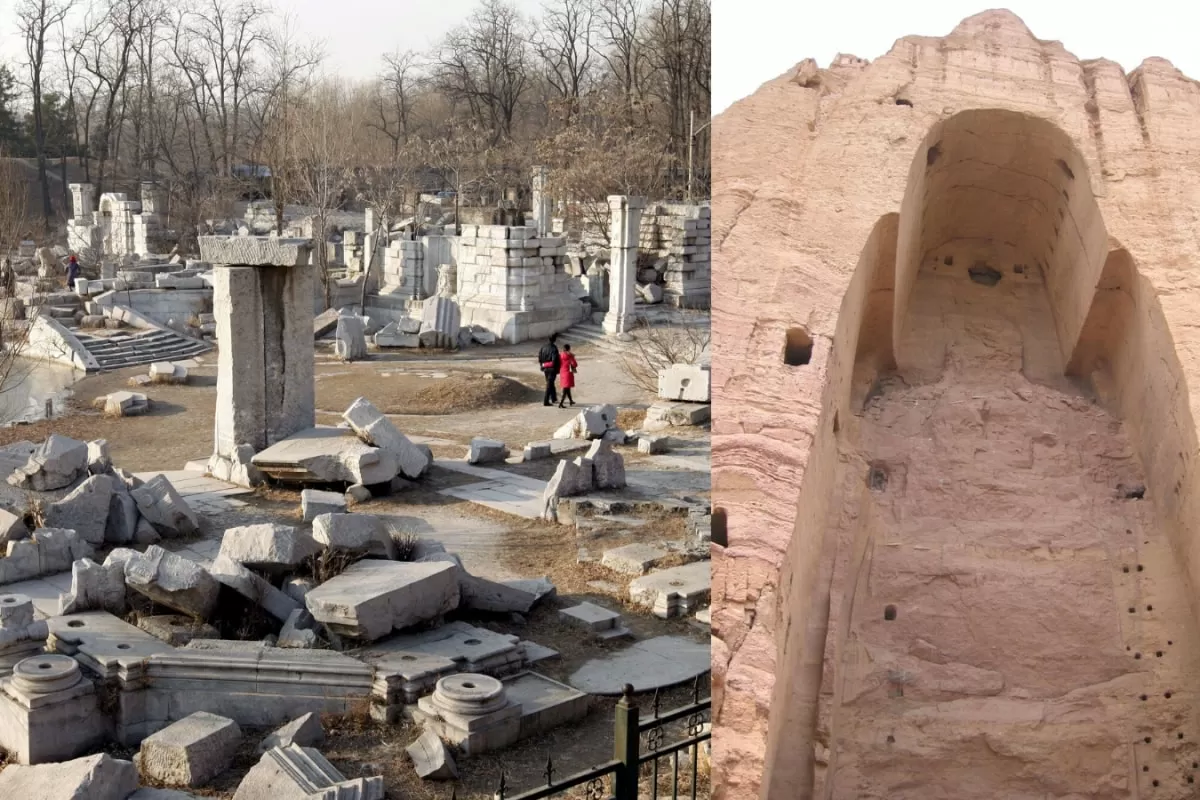
From Hiroshima to Bamiyan, war has left deep scars on humanity’s heritage. Throughout history, we have seen the devastating impact of war on our cultural and historical sites. These places, once symbols of our shared humanity, have been forever marked by destruction and loss. As we reflect upon the consequences of war, it is important to remember and honor these eight heritage sites that have been forever altered by the ravages of conflict.
1. Hiroshima, Japan
On August 6, 1945, the world witnessed the first use of atomic weapons in warfare. The city of Hiroshima, Japan, was completely decimated by the atomic bomb, leaving behind a devastating trail of destruction. The Hiroshima Peace Memorial, also known as the Genbaku Dome, is a haunting reminder of the horrors of war. The skeletal remains of this building, which was one of the few structures to survive the bombing, stands as a testament to the enduring resilience of the human spirit.
2. Bamiyan Buddhas, Afghanistan
In March 2001, the world was shocked by the destruction of the Bamiyan Buddhas in Afghanistan. These giant statues, carved into the cliffs of the Bamiyan valley, were a UNESCO World Heritage Site and held great cultural and historical significance. However, they were destroyed by the Taliban, who deemed them as “idols” and a threat to their beliefs. This senseless act of destruction not only erased a part of Afghanistan’s heritage but also symbolized the loss of our shared humanity.
3. Palmyra, Syria
The ancient city of Palmyra in Syria was once a bustling center of trade and culture. However, it has now been reduced to ruins due to the ongoing conflict in the country. The famous Temple of Bel, dating back to the first century AD, was destroyed by ISIS in 2015. This is just one of the many historical sites that have been destroyed or damaged in the Syrian civil war, representing a tragic loss for the world.
4. Dresden, Germany
During World War II, the city of Dresden, Germany, was heavily bombed by the Allies, resulting in the destruction of its historic center. The Frauenkirche, a famous Lutheran church, was reduced to rubble and remained in ruins for decades as a reminder of the devastation of war. However, it was eventually rebuilt in the original Baroque style, serving as a symbol of reconciliation and hope for the future.
5. Timbuktu, Mali
The ancient city of Timbuktu in Mali was a renowned center of learning and trade in the 15th and 16th centuries. However, in 2012, it was occupied by militant groups who sought to destroy the city’s cultural and religious sites. The mausoleums of Sidi Mahmoud, Sidi Moctar, and Alpha Moya were all targeted and largely destroyed. The actions of these extremists not only erased a part of Mali’s heritage but also threatened the legacy of this once-great city.
6. Warsaw, Poland
The capital city of Poland, Warsaw, was heavily bombed during World War II, resulting in the destruction of over 85% of its buildings. The Old Town, a UNESCO World Heritage Site, was completely destroyed and had to be painstakingly reconstructed using the original plans and materials. Today, it stands as a testament to the resilience and determination of the Polish people and is a symbol of hope and rebirth.
7. Aleppo, Syria
Once a thriving cultural hub, the city of Aleppo in Syria has been ravaged by years of conflict. The famous citadel, a medieval fortress and a UNESCO World Heritage Site, has been heavily damaged by bombing and fighting. The destruction of this iconic landmark is a tragic loss for Syria and the world, as it represented centuries of history and culture.
8. Mostar, Bosnia and Herzegovina
During the Bosnian War in the 1990s, the historic Old Bridge in Mostar, Bosnia and Herzegovina, was destroyed by Croatian forces. This iconic bridge, dating back to the 16th century, was a symbol of the city’s multiethnic heritage. After years of dedicated reconstruction efforts, the bridge was reopened in 2004, serving as a powerful symbol of reconciliation and unity.
In conclusion, from Hiroshima to Bamiyan, war has left a lasting impact on humanity’s heritage. These eight sites, among many others, serve
