
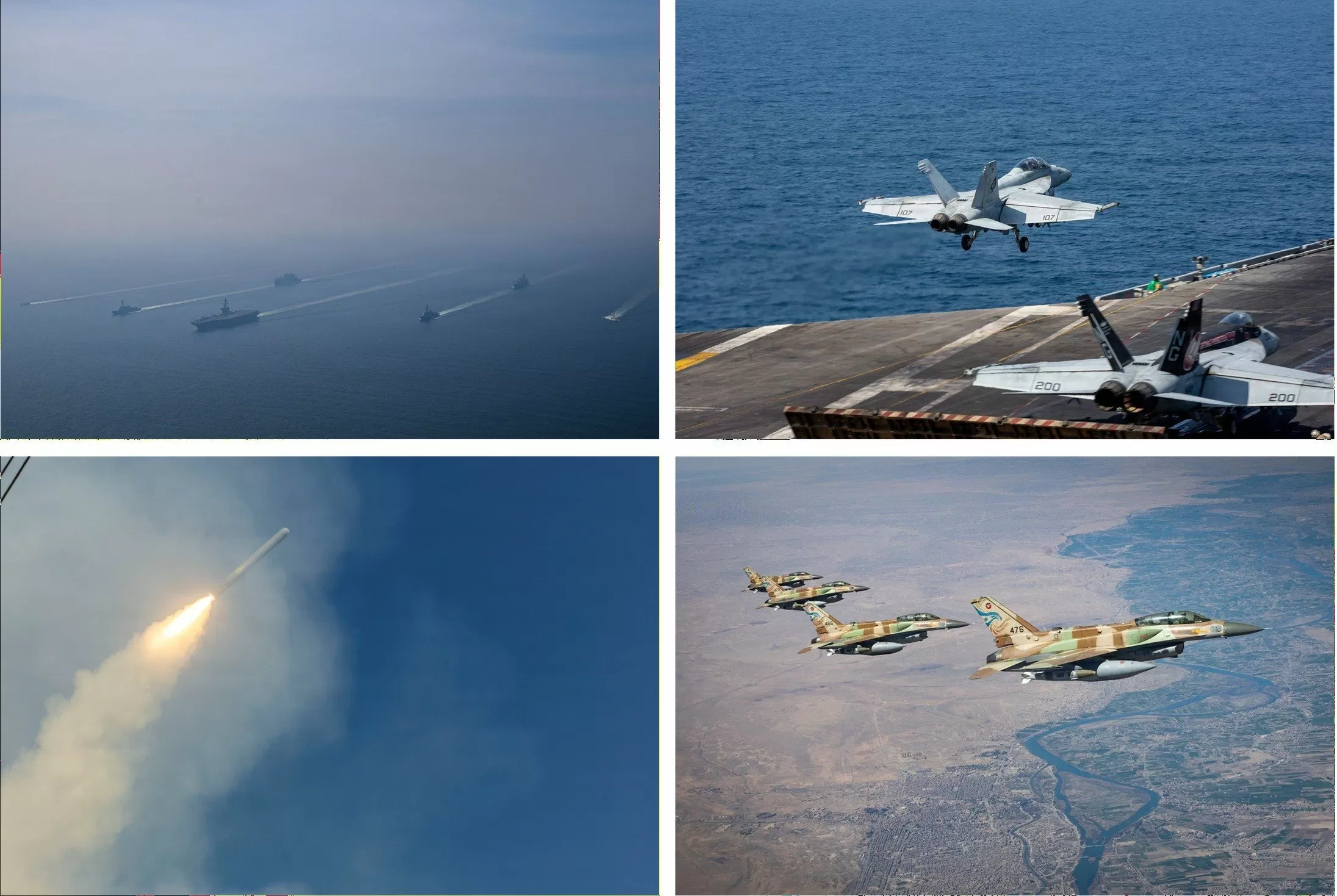
The United States has been at the forefront of global politics for centuries, and its actions have often been met with both praise and criticism. In recent times, one of the most pressing issues has been the relationship between the US and Iran. While Congress has yet to declare war on Iran, there have been ongoing campaigns that have raised concerns and sparked debates. However, this is not a new phenomenon in American history. In fact, it is consistent with the country’s past actions.
The current campaign against Iran can be traced back to the US withdrawal from the Joint Comprehensive Plan of Action (JCPOA) in 2018. This agreement, also known as the Iran nuclear deal, was signed by the US, Iran, and five other world powers in 2015. It aimed to limit Iran’s nuclear program in exchange for lifting economic sanctions. However, the Trump administration deemed it as a flawed deal and withdrew from it, imposing harsh sanctions on Iran instead.
Since then, tensions between the two countries have been on the rise. The US has accused Iran of supporting terrorism and destabilizing the region, while Iran has condemned the US for its aggressive actions and interference in its internal affairs. The recent assassination of Iranian General Qasem Soleimani by the US has further escalated the situation, with Iran vowing to retaliate.
Many have criticized the US for its actions, arguing that it is a violation of international law and could lead to a full-blown war. However, history shows that the US has a long-standing tradition of using military force and covert operations to achieve its foreign policy objectives. From the overthrow of the democratically elected government in Iran in 1953 to the invasion of Iraq in 2003, the US has a track record of intervening in other countries’ affairs.
Moreover, the US has a history of using economic sanctions as a tool to pressure and weaken its adversaries. In the case of Iran, the US has imposed crippling sanctions that have severely impacted the country’s economy and its people. This has been a consistent tactic used by the US in various conflicts, including Cuba, North Korea, and Venezuela.
It is also worth noting that the US has a long-standing alliance with Israel, which has been a vocal critic of Iran and its nuclear program. The US has often aligned its policies with Israel’s interests, and this has been evident in its stance towards Iran. This close relationship has also influenced the US’s decision to withdraw from the JCPOA and impose harsh sanctions on Iran.
Despite the ongoing tensions and campaigns against Iran, it is essential to remember that the US has not declared war on the country. This is consistent with its approach in the past, where it has used various tactics to achieve its objectives without officially declaring war. This has been a controversial issue, with many arguing that it undermines the principles of democracy and transparency.
In conclusion, while the current campaign against Iran may seem alarming, it is not a new phenomenon in American history. The US has a history of using military force, economic sanctions, and covert operations to achieve its foreign policy goals. The ongoing tensions with Iran are consistent with this approach, and it remains to be seen how the situation will unfold. However, it is crucial to remember that the US has yet to declare war on Iran, and it is essential to approach the situation with caution and diplomacy.
