
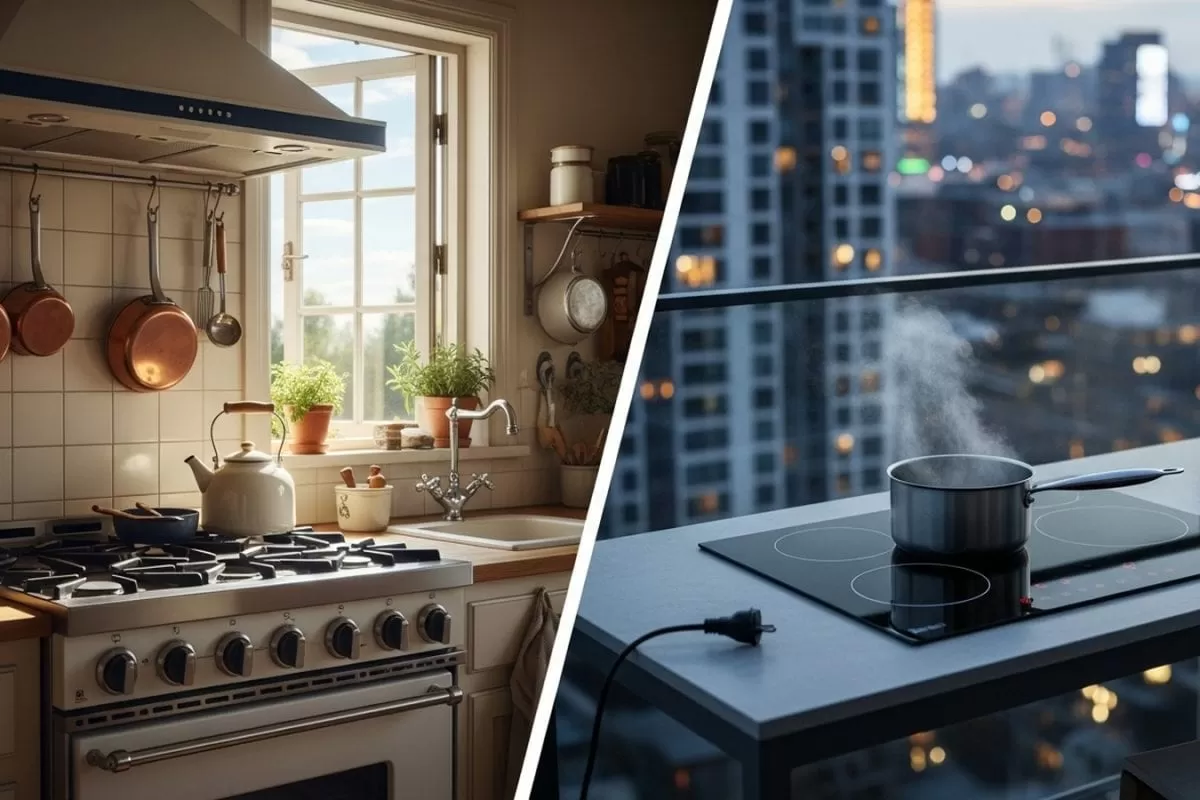
The recent LPG cylinder crisis has left many households in a state of panic and uncertainty. With the prices of cooking gas skyrocketing and the limited availability of cylinders, people are desperately searching for alternatives to meet their daily cooking needs. In such a situation, the idea of using an induction stove has gained popularity. But the question remains, can an induction stove really help us in this critical solution? Let’s explore.
First and foremost, let’s understand what an induction stove is. Unlike traditional gas stoves, an induction stove uses electromagnetic energy to heat the cooking vessel directly. This means that there is no need for a flame or any other external heat source. The stove itself does not get hot, making it a safer option for households, especially those with children. It also eliminates the risk of gas leaks, which can be a major concern with LPG cylinders.
One of the main advantages of using an induction stove is its energy efficiency. It has been found that induction stoves use 50% less energy compared to gas stoves. This not only helps in reducing our carbon footprint but also saves us money in the long run. With the rising prices of LPG cylinders, this can be a major relief for households struggling to make ends meet.
Moreover, induction stoves offer a faster cooking experience. The heat is evenly distributed, resulting in quicker cooking times. This is especially beneficial for working individuals who have limited time to prepare meals. It also allows for precise temperature control, making it ideal for dishes that require specific cooking temperatures. This can be a game-changer for those who love to experiment with different cuisines.
Another advantage of using an induction stove is its ease of use and maintenance. Unlike gas stoves, there is no need for constant cleaning and maintenance of burners and gas pipes. Induction stoves have a smooth surface that can be easily wiped clean. This not only saves time but also ensures a hygienic cooking experience. Additionally, the absence of an open flame reduces the risk of accidents and makes it a safer option for households.
But the most crucial question remains, can an induction stove really help us in the current LPG cylinder crisis? The answer is yes. With the limited availability of LPG cylinders and the constant increase in prices, households are facing a major challenge in meeting their cooking needs. In such a scenario, an induction stove can be a viable alternative. It does not require any external fuel source and can be powered by electricity, which is more readily available. This eliminates the need to rely on LPG cylinders and provides a sustainable solution to the crisis.
Moreover, induction stoves are portable and can be easily moved from one place to another. This is especially beneficial for those who live in rented accommodations or have to frequently relocate due to work. It also makes it a convenient option for outdoor cooking, such as during camping trips or picnics.
In addition to all these benefits, using an induction stove also promotes a healthier lifestyle. As it does not produce any smoke or harmful gases, it helps in maintaining a clean and pollution-free environment. This is particularly important in today’s times when air pollution has become a major concern. By switching to an induction stove, we can contribute towards a greener and healthier planet.
In conclusion, the current LPG cylinder crisis has left us all searching for alternatives to meet our cooking needs. In this critical situation, an induction stove can be a practical and sustainable solution. Not only does it offer numerous benefits such as energy efficiency, faster cooking, and ease of use, but it also helps in reducing our reliance on LPG cylinders. It is time for us to embrace this technology and make a positive impact on our lives and the environment. Let’s make the switch to induction stoves and cook our way to a better future.
