
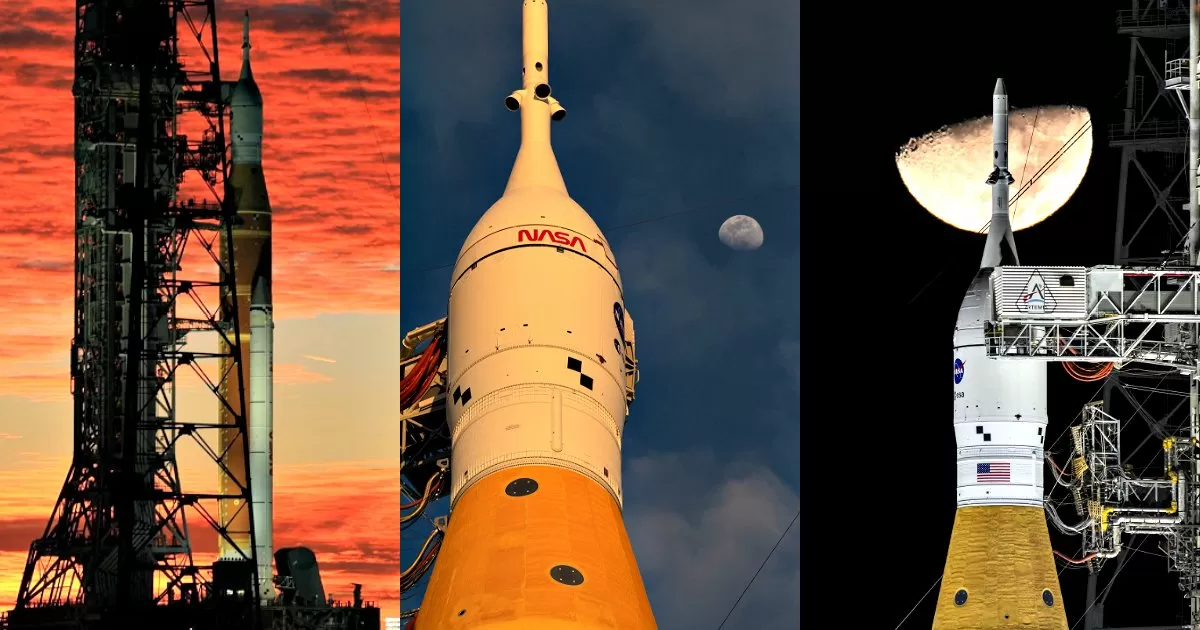
It has been almost 50 years since humans last set foot on the moon. The Apollo 17 mission in 1972 marked the end of NASA’s lunar exploration program, leaving many to wonder when we would return. But now, after decades of anticipation, the time has finally come for us to go back to the moon.
On April 1st, NASA’s Artemis 2 mission is set to launch, marking the first crewed lunar mission since the Apollo era. This historic moment is made possible by the Space Launch System (SLS) rocket, which has been in development for over a decade. The SLS is the most powerful rocket ever built, capable of carrying astronauts and cargo to the moon and beyond.
The Artemis 2 mission is the second in a series of missions that will ultimately lead to the establishment of a sustainable presence on the moon. The goal of the Artemis program is to not only return humans to the moon, but also to establish a lunar outpost that will serve as a stepping stone for future missions to Mars and beyond.
But why is it so important for us to go back to the moon? The answer lies in the potential for scientific discovery and technological advancement. The moon is a treasure trove of resources and information that can help us better understand our own planet and the universe as a whole.
One of the main objectives of the Artemis program is to search for and extract resources on the moon, such as water ice, which can be used for drinking, growing plants, and producing rocket fuel. This will not only reduce the cost of future missions, but also pave the way for sustainable living on the moon.
In addition, the moon holds valuable clues about the history of our solar system and the origins of life on Earth. By studying the moon’s geology and conducting experiments on its surface, we can gain a better understanding of how our planet and others in our solar system were formed.
But perhaps the most exciting aspect of the Artemis program is the potential for technological advancement. The challenges of sending humans to the moon and establishing a presence there will require innovative solutions and new technologies. This will not only benefit space exploration, but also have practical applications here on Earth.
The Artemis 2 mission will consist of a crew of four astronauts, who will spend approximately 10 days in lunar orbit. During this time, they will conduct a series of experiments and test out new technologies that will be crucial for future missions. This will be the first time humans have orbited the moon since the Apollo 17 mission, and it marks a significant step towards achieving the ultimate goal of landing humans on the moon once again.
The Artemis program is not just about going back to the moon, it is about pushing the boundaries of human exploration and expanding our knowledge of the universe. It is a testament to the determination and ingenuity of the human spirit, and a reminder that anything is possible when we work together towards a common goal.
As we prepare for the launch of the Artemis 2 mission, let us remember the words of President John F. Kennedy, who famously said, “We choose to go to the moon in this decade and do the other things, not because they are easy, but because they are hard.” The journey back to the moon may not be easy, but it is a journey that we must embark on in order to continue pushing the boundaries of human achievement.
So let us all look to the skies on April 1st with excitement and anticipation, as we witness the launch of the Artemis 2 mission and the beginning of a new era of lunar exploration. The moon is calling us back, and it is time for us to answer that call.
