
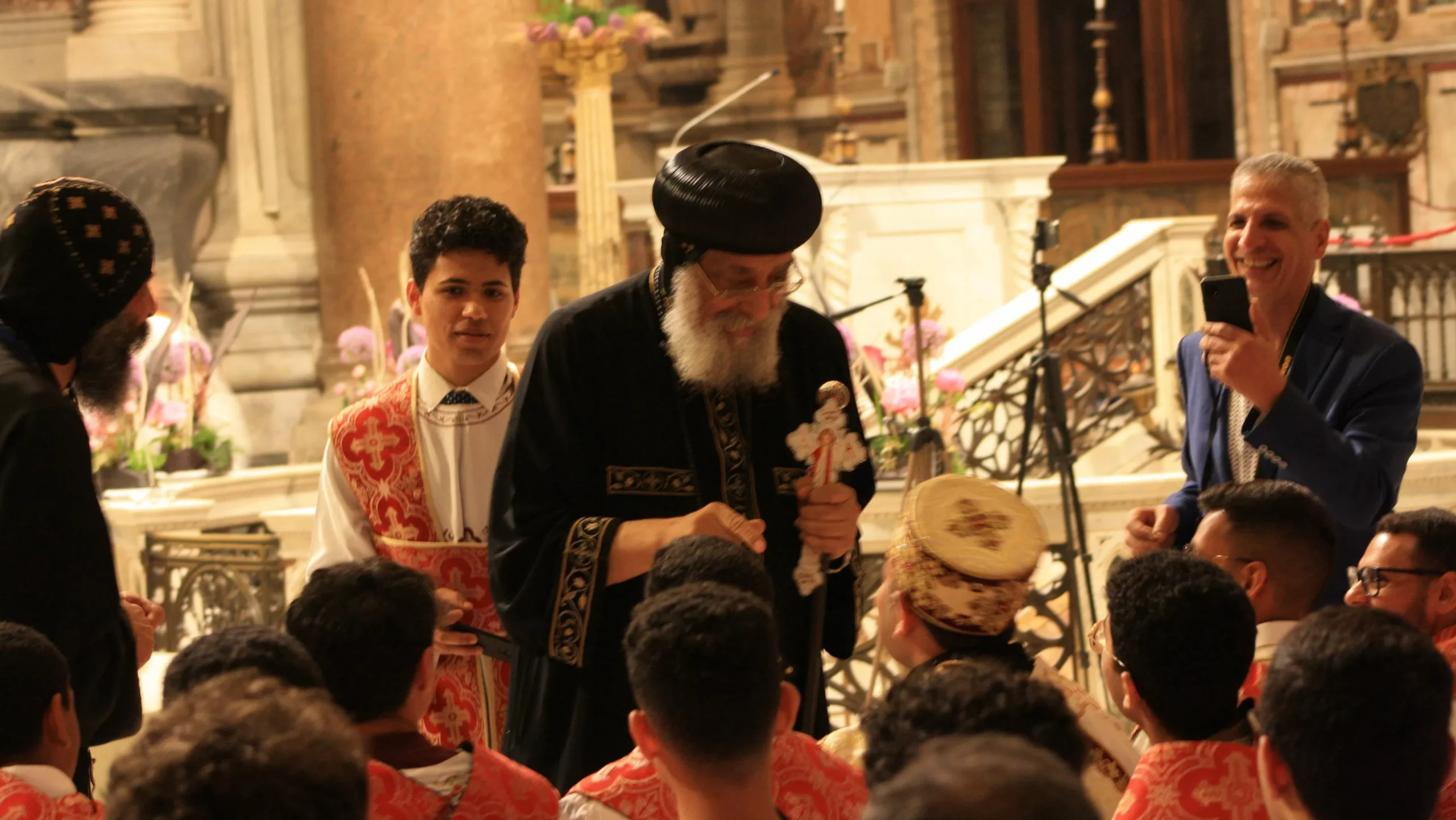
Egypt’s Christian Minority Confronts Violence, Discrimination, and Legal Risk
On March 27, 2026, the peaceful atmosphere of the Monastery of St. Paul the Anchorite, located in the desert of Egypt, was shattered by the arrival of a woman accompanied by armed, masked men. Their intention was to seize approximately 2,000 square meters of state-owned archaeological land adjacent to the monastery. This incident not only threatened the safety and security of the monastery, but also highlighted the ongoing struggles faced by Egypt’s Christian minority.
The Coptic Christian community in Egypt, which makes up around 10% of the population, has a long history in the country dating back to the first century. However, despite their deep roots in Egypt, Coptic Christians have faced discrimination and violence for decades. This incident at the Monastery of St. Paul is just one example of the challenges they continue to face.
The attempted seizure of the land near the monastery is not an isolated incident. In recent years, there have been numerous attacks on Coptic churches, homes, and businesses. These attacks have resulted in the loss of lives, destruction of property, and displacement of families. The perpetrators of these attacks often go unpunished, leaving the Coptic community feeling vulnerable and marginalized.
In addition to physical violence, Coptic Christians also face discrimination in various aspects of their lives. They are often denied job opportunities, face difficulties in obtaining permits to build churches, and are subject to unfair treatment in the legal system. This discrimination is not only a violation of their basic human rights, but it also hinders their ability to fully participate in society and contribute to the development of their country.
The incident at the Monastery of St. Paul also highlights the legal risks faced by Egypt’s Christian minority. The attempted seizure of the land was a clear violation of the law, yet the perpetrators were able to carry out their plan with little consequence. This sends a dangerous message that the rule of law does not apply to everyone equally, and that the rights of minorities can be easily disregarded.
Despite these challenges, the Coptic Christian community in Egypt remains resilient and determined to overcome these obstacles. They have a strong faith and a deep connection to their country, and they refuse to be intimidated or silenced. In the face of violence and discrimination, they continue to spread a message of love, forgiveness, and unity.
The Egyptian government has taken steps to address the issues faced by the Coptic community, such as passing a law to facilitate the construction of churches and increasing security measures around churches and monasteries. However, more needs to be done to ensure the safety and protection of the Coptic minority.
It is also important for society as a whole to recognize and condemn any form of discrimination and violence against the Coptic community. This includes promoting a culture of tolerance and respect for diversity, and holding accountable those who perpetrate such acts.
As we reflect on the incident at the Monastery of St. Paul, let us remember that Egypt’s Christian minority is an integral part of the country’s rich history and culture. They have contributed greatly to the development of Egypt and continue to do so despite the challenges they face. It is our responsibility as a society to ensure that they are able to live and practice their faith freely and without fear.
In conclusion, the incident at the Monastery of St. Paul serves as a reminder of the ongoing struggles faced by Egypt’s Christian minority. It is a call to action for the government and society to take concrete steps to protect the rights and safety of this community. Let us stand in solidarity with our Coptic brothers and sisters and work towards a future where all Egyptians can live in peace and harmony, regardless of their religion.
