
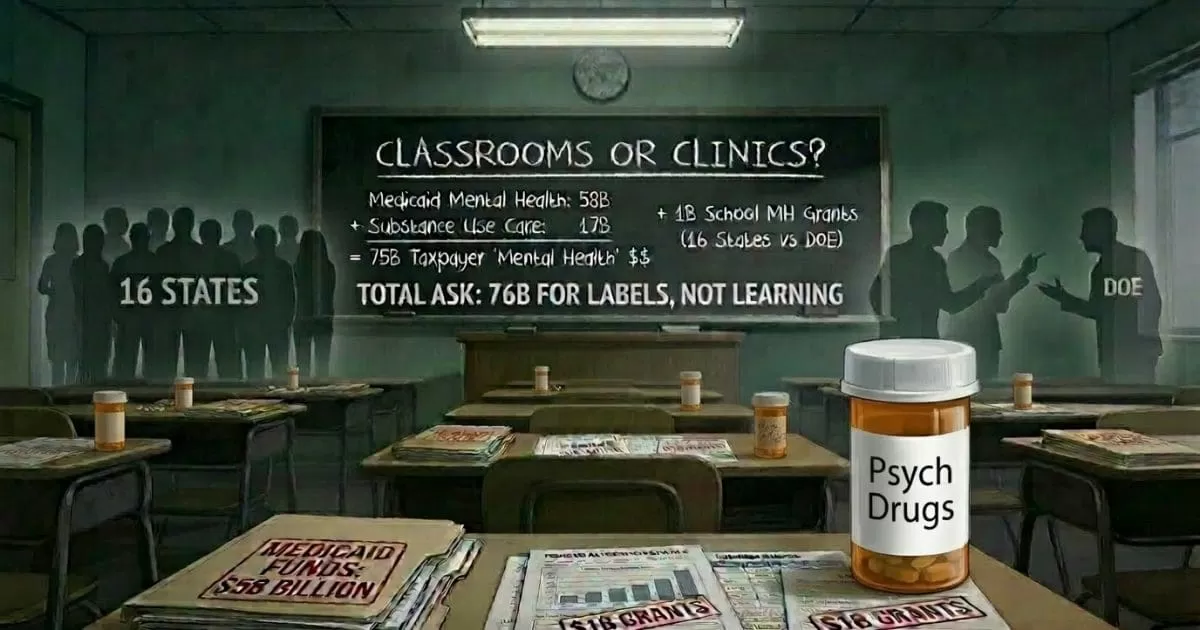
Classrooms or Clinics? 16 States vs. DOE in a $1 Billion Lawsuit on Top of $75 Billion in Mental Health Spending
In recent years, the issue of mental health has gained more attention and recognition, with an increasing number of people struggling with mental health issues. In response, the government has allocated billions of dollars towards mental health programs and services. However, a recent lawsuit filed by 16 states against the Department of Education (DOE) has brought to light the debate between classrooms and clinics when it comes to addressing mental health in schools.
The lawsuit, which seeks $1 billion in damages, accuses the DOE of failing to enforce the Individuals with Disabilities Education Act (IDEA) and provide adequate mental health services to students with disabilities. The states argue that the DOE’s lack of oversight has resulted in a violation of these students’ rights and has caused them to suffer academically, socially, and emotionally.
This lawsuit has sparked a debate between those who believe that classrooms are the best place to address mental health issues and those who argue that clinics are better equipped to handle such matters. The reality is that both are necessary and play a crucial role in supporting students’ mental well-being.
On one hand, classrooms provide a safe and familiar environment for students to discuss their mental health concerns. Teachers and school staff are often the first to notice any changes in a student’s behavior, and they can provide immediate support and referrals to mental health professionals if needed. Additionally, schools can offer preventive measures, such as mental health education and awareness programs, to help students develop coping strategies and build resilience.
On the other hand, clinics offer specialized and intensive support for students with more severe mental health issues. These facilities have trained professionals who can provide individualized treatment plans and therapies to help students manage their conditions. They also offer a safe space for students to seek help without fear of judgment or stigma.
Both classrooms and clinics are essential in addressing mental health in schools, and neither should be disregarded. However, the real issue at hand is the lack of funding and resources allocated towards mental health services in schools. Despite the government’s $75 billion spending on mental health, the majority of these funds go towards clinics and hospitals, leaving schools with limited resources to support their students’ mental well-being.
This is where the DOE’s role becomes crucial. As the governing body responsible for enforcing IDEA, the DOE must ensure that schools receive adequate funding and resources to provide mental health services to students with disabilities. By doing so, they can prevent situations like the current lawsuit from arising and ensure that all students have equal access to quality mental health care.
Furthermore, the DOE should work towards promoting a collaborative approach between classrooms and clinics. Schools and clinics can work together to create a comprehensive mental health support system for students. This can include training teachers and school staff to identify and address mental health concerns, establishing partnerships with local clinics to provide on-site services, and creating a referral system for students who require more intensive support.
It is time to shift the focus from classrooms vs. clinics to a united effort towards supporting students’ mental health. This requires a significant investment from the government, as well as a change in mindset and approach towards mental health in schools. We must recognize that mental health is just as important as physical health, and it is our responsibility to ensure that students receive the support and care they need to thrive academically and emotionally.
In conclusion, the $1 billion lawsuit against the DOE serves as a wake-up call for the government to prioritize mental health in schools. It is time to bridge the gap between classrooms and clinics and work towards a holistic approach to supporting students’ mental well-being. Let us not forget that our students are the future, and it is our duty to provide them with the necessary tools and resources to succeed in all aspects of their lives.
