
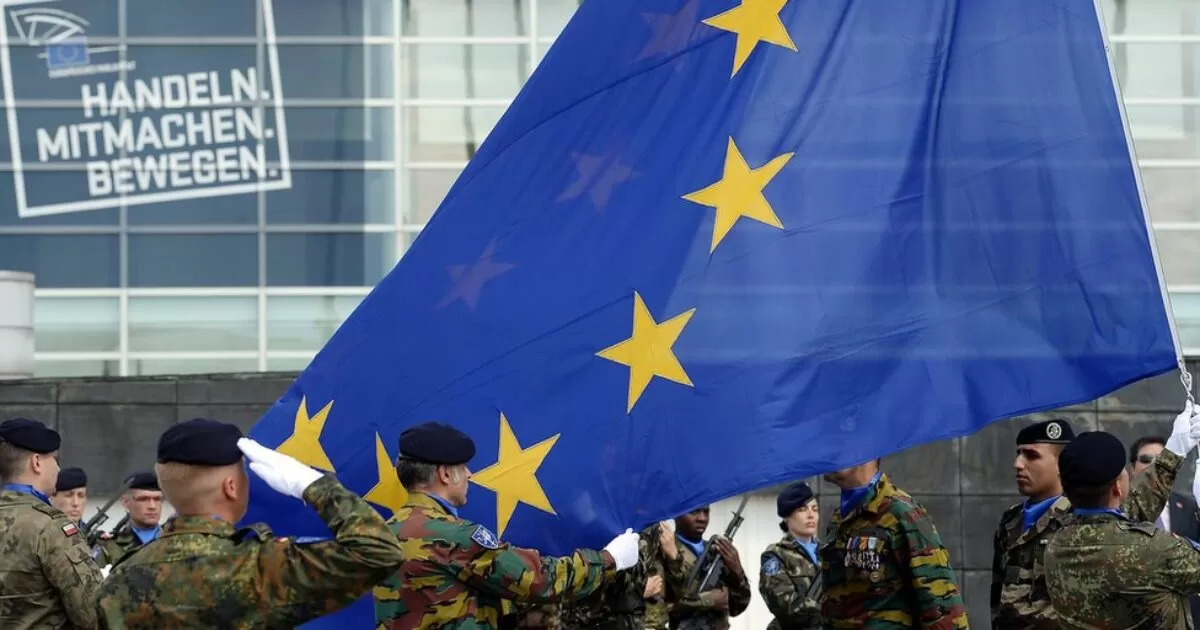
Europe has long been considered a hub of economic and political power. However, when it comes to military strength and defense spending, the continent has fallen behind. This reality has been brought to light as a result of President Trump’s push for NATO allies to commit to spending 5% of their GDP on defense by 2035. This call for increased military investment has sparked a much-needed discussion on the state of Europe’s defense capabilities and the potentially insurmountable challenge of reversing decades of military neglect.
For far too long, Europe has relied on the United States to shoulder the majority of the burden when it comes to military defense. The United States alone accounts for nearly 70% of NATO’s total defense spending, while many European countries fall short of the required 2% of GDP spending benchmark. This disparity has long been a topic of debate, with many European leaders arguing that their limited resources should be allocated to other pressing issues such as economic development and social welfare. However, as the world becomes increasingly uncertain and volatile, relying on others for security is no longer a viable option.
President Trump’s push for NATO allies to increase their defense spending aims to address this issue head-on. The 5% of GDP target set for 2035 may seem ambitious, but it is a necessary step in ensuring that Europe’s defense capabilities are up to par with the rest of the world. For too long, Europe has underestimated the importance of a strong military, neglecting to invest in modernizing and maintaining its armed forces. This has resulted in outdated equipment, lack of training, and insufficient resources, all of which pose a significant threat to the continent’s security.
The reality is that Europe is not adequately prepared to defend itself in the face of potential threats. In recent years, we have seen an increase in global conflicts, terrorism, and cyberattacks, all of which require a strong and capable military to protect against. The lack of investment in this sector has put Europe in a vulnerable position, leaving it reliant on the United States and other allies for support and protection.
The mathematics of military inadequacy in Europe is concerning, to say the least. With only a handful of countries meeting the required 2% of GDP spending benchmark, the continent’s overall defense capabilities are severely compromised. This has also resulted in an uneven distribution of resources and responsibilities within NATO, with some countries carrying a much greater burden than others. Such disparities not only weaken the alliance but also put a strain on relationships between member countries.
The call for increased defense spending by NATO allies is an opportunity for Europe to take a hard look at its military capabilities and make the necessary changes. The reality is that without proper investment and modernization, Europe will continue to fall behind in the ever-evolving landscape of global security. The 5% of GDP target set by President Trump is not just a number; it is a wake-up call for Europe to take responsibility for its own defense and to become a true global leader in this crucial area.
It is time for European leaders to prioritize the safety and security of their citizens by investing in their armed forces. This does not mean neglecting other important issues, but rather finding a balance between economic development and military strength. As the saying goes, “peace through strength.” A strong military is a deterrent against those who seek to do harm, and it also allows for swift and decisive action in times of crisis.
In conclusion, President Trump’s push for NATO allies to commit to spending 5% of GDP on defense by 2035 has shed light on Europe’s military inadequacy. It is a call to action for Europe to reverse the decades of neglect and prioritize the strengthening of its armed forces. This is not just about meeting a target, but about ensuring the safety and security of the continent and its citizens. It is time for Europe to take a defense reality check and make the necessary changes to become a strong and capable player on the global stage. Let us not wait until it is too late to address this issue, and instead, let us act now in the best interest of our collective safety and security.
