
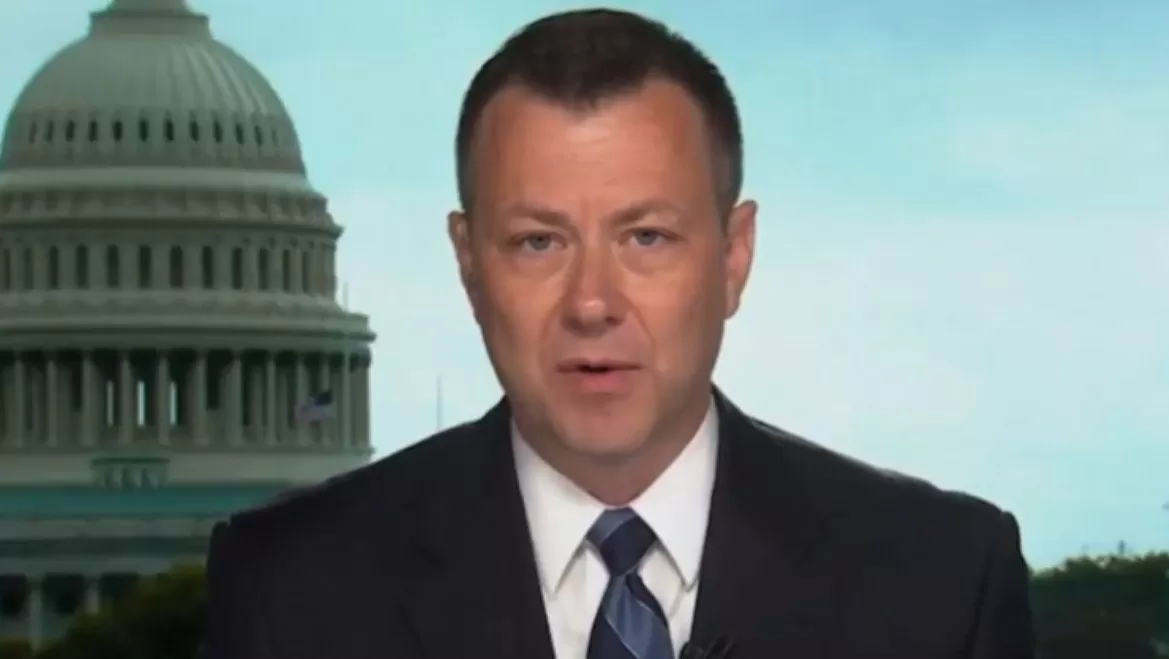
A federal judge has recently dismissed former FBI counterintelligence agent Peter Strzok’s lawsuit, in which he claimed his First Amendment rights were violated when he was fired during the first Trump Administration. The decision was made by US District Judge Amy Berman Jackson, an Obama appointee, who stated that Strzok failed to prove that his termination was a violation of his First Amendment rights.
This ruling has been met with mixed reactions, with some praising the decision while others are questioning its implications. However, one thing is clear – the lawsuit and its dismissal have sparked a heated debate regarding free speech and its limitations within the government.
For those who may not be familiar with the case, Peter Strzok was a key figure in the FBI’s investigation into Russian interference in the 2016 US Presidential election. However, Strzok’s actions and his role in the investigation came under intense scrutiny when it was discovered that he had exchanged text messages with fellow FBI agent Lisa Page, with whom he was having an extramarital affair. These messages contained derogatory comments about then-presidential candidate Donald Trump, which led to Strzok’s removal from the investigation and ultimately his firing in 2018.
In response, Strzok filed a lawsuit against the government, claiming that his termination was a violation of his First Amendment rights. He argued that his text messages were protected speech and that his firing was a direct result of his political views. However, Judge Berman Jackson disagreed and stated that Strzok’s actions were not protected under the First Amendment.
In her ruling, the judge highlighted the fact that Strzok’s text messages were made while he was on duty and using a government-issued phone. She also noted that as a public servant, Strzok’s actions could impact the integrity and impartiality of the FBI’s investigation. Therefore, his termination was not a violation of his First Amendment rights but rather a necessary measure to maintain the public’s trust in the government.
This decision has been met with support from those who believe that government employees should be held to a higher standard when it comes to expressing their political views. They argue that while everyone has the right to free speech, those in positions of power and authority must be cautious about their actions and words, as it can have far-reaching consequences.
On the other hand, some have criticized the ruling, stating that it sets a dangerous precedent for limiting free speech within the government. They argue that Strzok’s termination was a political move and that his actions did not warrant such severe consequences.
Regardless of one’s stance on the matter, it is essential to note that this ruling does not take away Strzok’s right to free speech. He is still free to express his opinions and views, but he must do so outside of his role as a public servant. As Judge Berman Jackson stated in her ruling, “the government has a significant interest in regulating the speech of its employees to promote the efficiency of the public services it performs.”
In conclusion, Judge Berman Jackson’s decision to dismiss Peter Strzok’s lawsuit has sparked a necessary conversation about free speech within the government. While the ruling may have its critics, it serves as a reminder that those in positions of power must be mindful of their actions and words. As public servants, they have a duty to uphold the integrity and impartiality of their roles, and this includes being cautious about their political views while on duty.
