
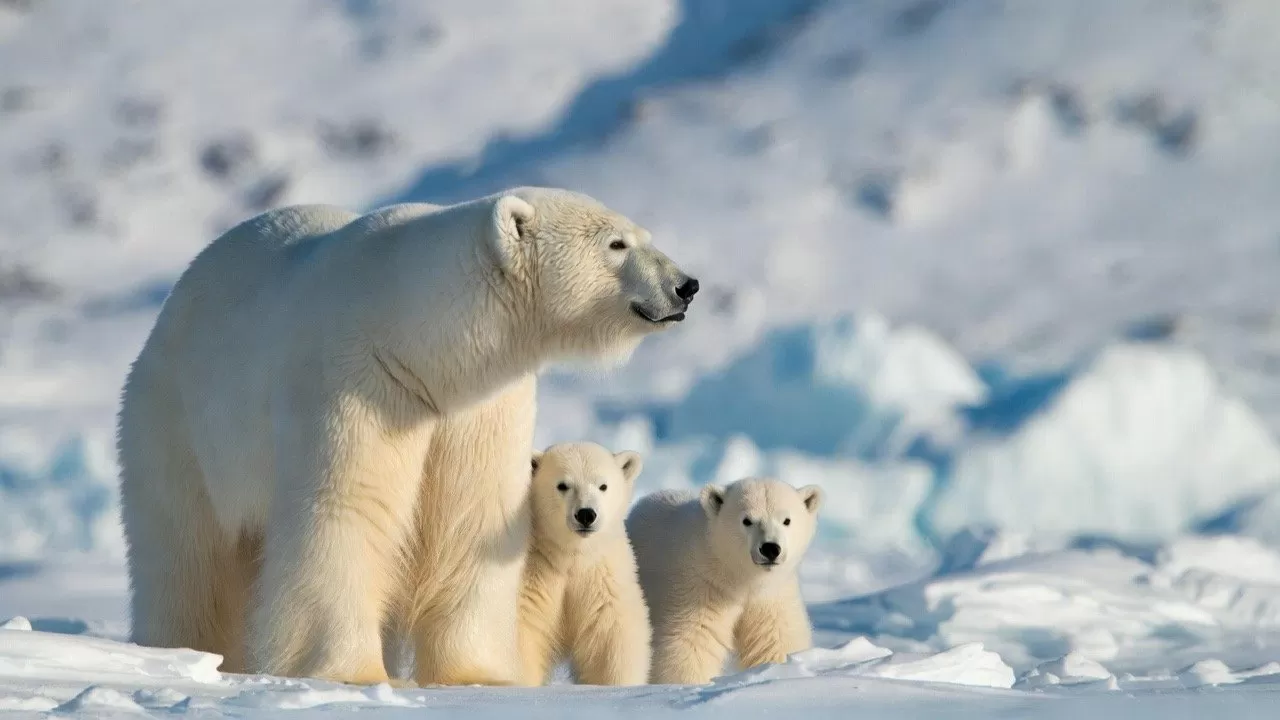
Polar Bears Thriving in Svalbard Despite Melting Ice Caps, New Study Shows
The Arctic archipelago of Svalbard, located in Norway, is home to a diverse range of wildlife, including the iconic polar bear. These magnificent creatures have long been a symbol of the harsh and unforgiving conditions of the Arctic. However, a recent study has shed light on a surprising and positive trend in the polar bear population of Svalbard – they are getting “fatter and healthier” despite the alleged effects of global warming.
The study, conducted by a team of researchers from the Norwegian Polar Institute, has been published in the journal Ecological Applications. It reveals that the polar bears living in Svalbard are thriving, with the population growing at a steady rate. This is an unexpected finding, given the widespread belief that polar bears are at risk due to the melting ice caps caused by global warming.
For years, we have been bombarded with images of polar bears struggling to survive in a rapidly changing environment. The melting of sea ice, which is their primary hunting ground for seals, has been cited as a major threat to their survival. However, the new study has shown that the polar bears of Svalbard are defying the odds and adapting to their changing habitat.
The researchers studied the body condition and population dynamics of polar bears in Svalbard over a period of 20 years. They found that the bears are not only surviving but are also thriving. They are getting “fatter and healthier” compared to previous decades. This is a significant finding, as it challenges the commonly held belief that polar bears are on the brink of extinction.
One of the key reasons for this positive trend is the abundance of food in Svalbard. The polar bears here have access to an abundant supply of seals, their primary source of food. The study also revealed that the bears are consuming a more diverse diet, including a higher proportion of whale carcasses. This is due to the increase in Arctic shipping, which has led to more whale strikes and accidental deaths. While this is a concern for the whales, it has provided an additional food source for the polar bears.
Moreover, the study also highlighted the resilience of polar bears. These creatures are known for their adaptability, and the ones in Svalbard are no exception. They have been observed changing their hunting and feeding behaviors to cope with the changing environment. They have also been seen traveling longer distances to find food, indicating their ability to adjust to the changing conditions.
The study’s findings have been met with mixed reactions, with some experts questioning its validity. However, the researchers stand by their findings, stating that they have conducted a comprehensive and thorough study. They have also emphasized the need to continue monitoring the polar bear population to gain a better understanding of their behavior and response to climate change.
This study is a ray of hope in the midst of dire predictions about the future of polar bears. It challenges our preconceived notions and shows us that these magnificent creatures are more resilient than we thought. It also highlights the importance of conducting thorough research and not relying solely on assumptions and speculation.
The study’s findings also have significant implications for the debate surrounding global warming and its impact on wildlife. While the melting of ice caps is a real and pressing concern, this study shows that it is not the only factor affecting polar bears. It reminds us that there are other factors at play, such as food availability and the animals’ adaptability, which must be taken into consideration.
In conclusion, the polar bears of Svalbard are defying the odds and thriving in the face of adversity. Their ability to adapt to changing conditions and their access to abundant food sources have contributed to their success. This study serves as a reminder that we must continue to monitor and study these magnificent creatures to gain a better understanding of their behavior and needs. Let us celebrate this positive news and continue to work towards creating a sustainable future for polar bears and all other wildlife.
