
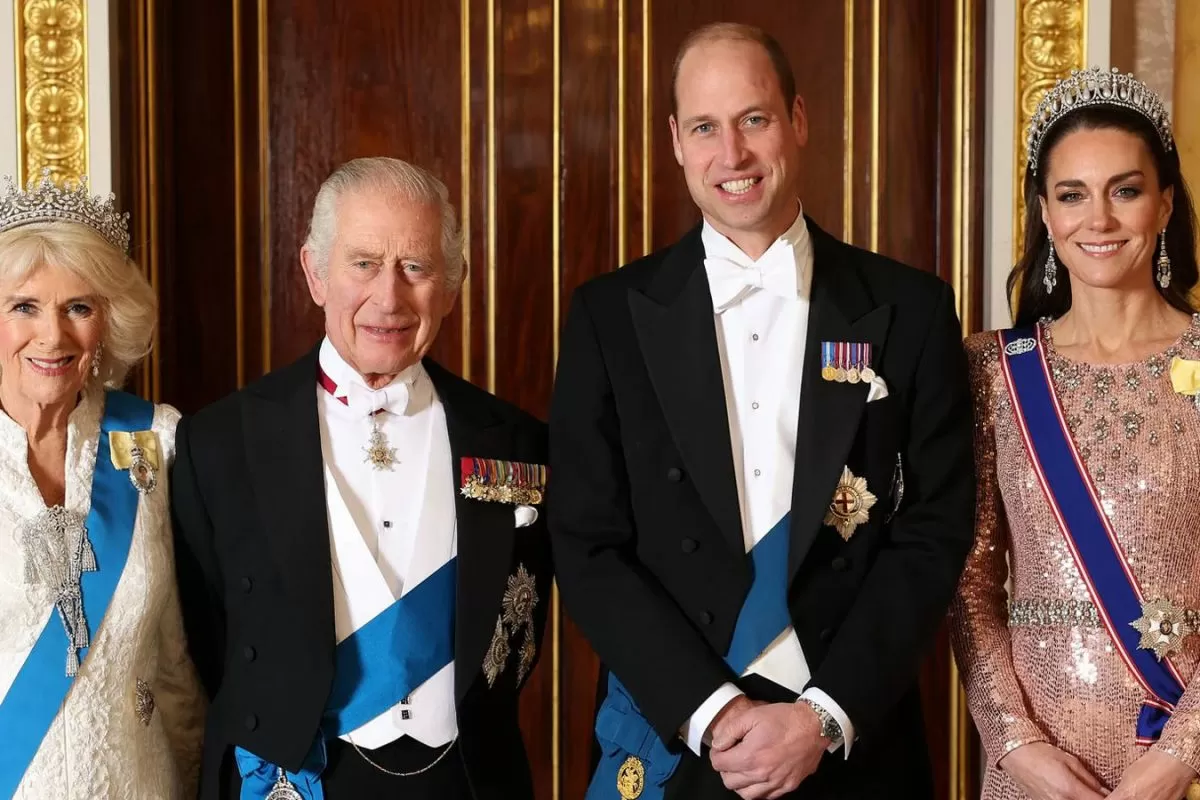
Britain’s monarchy has been a symbol of stability and tradition for centuries, and at the heart of this institution lies the line of succession. This line of succession determines who will inherit the throne and continue the legacy of the British monarchy. Despite recent scandals surrounding the Mountbatten-Windsor family, the line of succession remains firmly anchored in Prince William and his children, ensuring stability for the monarchy.
The British monarchy has faced its fair share of challenges over the years, but it has always managed to weather the storm and emerge stronger. The recent scandal surrounding Prince Andrew and his association with convicted sex offender Jeffrey Epstein has undoubtedly caused a stir in the media. However, it is important to remember that the monarchy is much more than one individual, and the line of succession ensures that the institution remains intact and continues to serve the British people.
At the top of the line of succession is Queen Elizabeth II, who has been on the throne for over six decades. Her reign has been marked by stability and dedication to her duties as the head of state. As she approaches her 95th birthday, there has been speculation about who will succeed her. However, there is no doubt that the throne will pass on to her eldest son, Prince Charles, when the time comes. Despite some controversy surrounding his personal life, Prince Charles has shown a strong commitment to his role as the Prince of Wales and has already started taking on more responsibilities in preparation for his future role as king.
Following Prince Charles in the line of succession is his eldest son, Prince William. As the Duke of Cambridge, Prince William has been a popular figure among the British public, and his marriage to Kate Middleton has only added to his popularity. The couple has two children, Prince George and Princess Charlotte, who are third and fourth in line to the throne respectively. The birth of their third child, Prince Louis, in 2018, further solidified the line of succession and ensured that the monarchy will continue for generations to come.
Prince William has shown a strong sense of duty and dedication to his role as a member of the royal family. He has also been actively involved in charitable work and has used his platform to raise awareness about important issues such as mental health. His wife, Kate Middleton, has also been a valuable asset to the monarchy, carrying out her duties with grace and charm. The couple’s growing family has only added to the public’s fascination with them, and they have become a symbol of hope and stability for the future of the monarchy.
The line of succession not only ensures stability for the monarchy but also reflects the changing times. In the past, only male heirs could inherit the throne, but in 2013, the Succession to the Crown Act was passed, allowing for gender equality in the line of succession. This means that Prince William and Kate Middleton’s daughter, Princess Charlotte, will not be bypassed for the throne by any future younger brothers. This progressive move shows the monarchy’s willingness to adapt and evolve with the times while still maintaining its traditions and values.
Some may argue that the line of succession is outdated and that the monarchy should be abolished altogether. However, the British monarchy is not just a figurehead; it plays a crucial role in the country’s political and cultural landscape. The Queen and her family represent the nation and act as ambassadors, promoting British interests and values around the world. The line of succession ensures that there is always a clear successor to the throne, avoiding any power struggles or uncertainty.
In conclusion, while recent scandals may have caused some to question the future of the British monarchy, the line of succession remains firmly anchored in Prince William and his children. The Duke and Duchess of Cambridge, along with their growing family, represent a new generation of the monarchy, one that is modern, relatable, and dedicated to serving the British people. The line of succession not only ensures stability for the monarchy but also reflects its ability to adapt and evolve while remaining true to its traditions. As the saying goes, “the show must go on,” and with the line of succession in place, the British monarchy will continue to do just that.
