
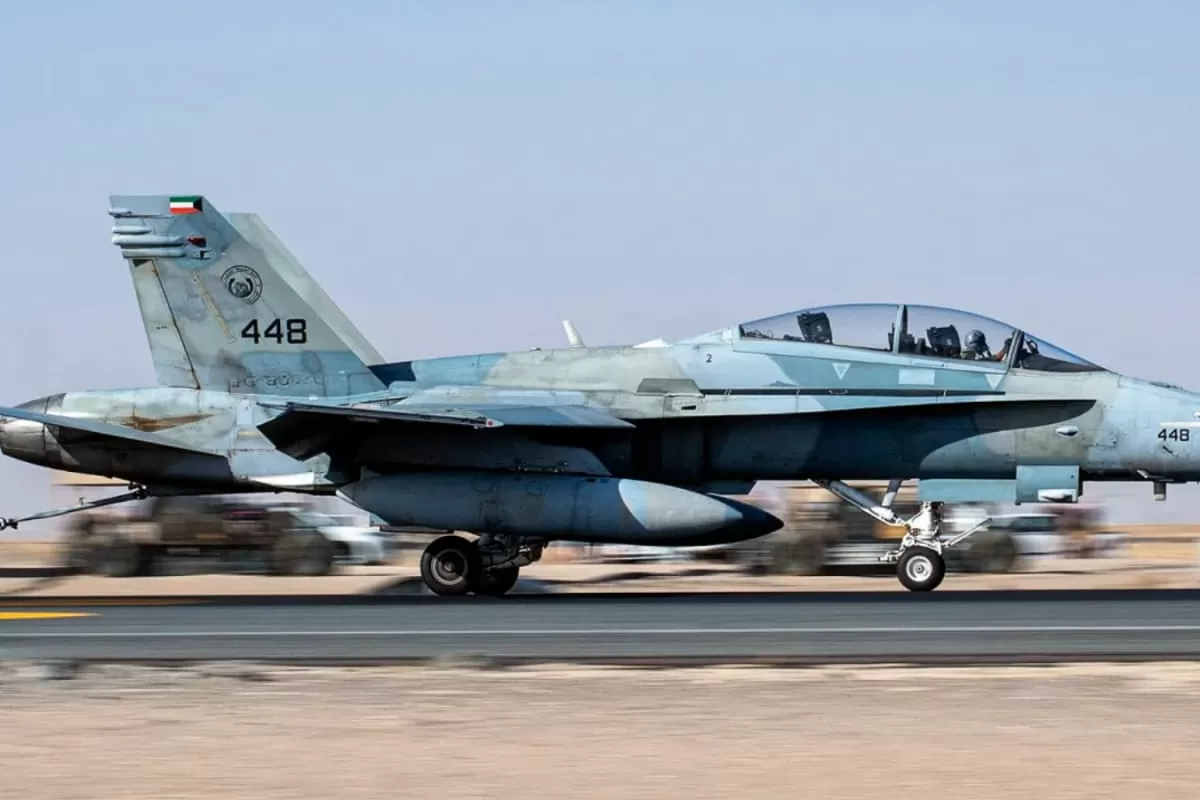
The F/A-18 Hornet: A Legacy of Excellence in Combat Aviation
The world of military aviation has been forever transformed with the introduction of the F/A-18 Hornet. This twin-engine, supersonic multirole combat aircraft, developed in the 1970s by McDonnell Douglas (now a part of Boeing), has become a symbol of excellence and innovation in the field of aerial warfare. With its sleek design, superior performance, and advanced technology, the F/A-18 Hornet has proven to be a formidable force in the skies, serving the United States Navy and Marine Corps, as well as several other countries around the globe.
The story of the F/A-18 Hornet began in the early 1970s, when the United States Navy identified the need for a new fighter aircraft to replace the aging F-4 Phantom II and A-7 Corsair II in their fleet. McDonnell Douglas, a renowned name in the aviation industry, took on the challenge and developed the F/A-18 Hornet, which was first introduced in 1983. Since then, this aircraft has gone through several upgrades and variants, each one more advanced and capable than the last.
One of the most impressive features of the F/A-18 Hornet is its ability to serve as both a fighter and an attack aircraft. This unique multirole capability has made it a valuable asset for the U.S. Navy and Marine Corps, as it can perform a wide range of missions, from air-to-air combat to air-to-ground strikes. Its two powerful General Electric F404 turbofan engines allow the Hornet to reach a maximum speed of Mach 1.8, making it one of the fastest combat aircraft in the world.
In addition to its speed and versatility, the F/A-18 Hornet is known for its exceptional maneuverability. Its twin tail fins and leading-edge extensions, along with its digital fly-by-wire flight control system, give it the ability to perform high angle-of-attack maneuvers, making it a formidable opponent in air-to-air combat. This agility and responsiveness have also proven to be crucial in close air support and ground attack missions.
But what sets the F/A-18 Hornet apart from other fighter aircraft is its advanced avionics and weapons systems. The Hornet is equipped with a wide range of sensors, including a nose-mounted APG-73 radar, which gives pilots a clear picture of the battlefield. It also has an infrared search and track (IRST) system, which allows the aircraft to detect and track targets using thermal imaging technology. The Hornet’s advanced navigation and targeting systems, along with its precision-guided weapons, make it a highly accurate and lethal combat aircraft.
Over the years, the F/A-18 Hornet has proven its worth in numerous conflicts and operations around the world. From Operation Desert Storm in the Gulf War to Operation Inherent Resolve in Iraq and Syria, the Hornet has consistently demonstrated its combat effectiveness and reliability. Its ability to take off from and land on aircraft carriers, as well as its short takeoff and vertical landing (STOVL) capability, have also made it an essential asset for the U.S. Marine Corps during amphibious operations.
But the F/A-18 Hornet’s impact goes beyond its combat capabilities. It has also played a vital role in technological advancements in the aviation industry. Its success has paved the way for the development of the F/A-18E/F Super Hornet, a larger and more advanced version of the Hornet, as well as the EA-18G Growler, an electronic warfare variant. These aircraft have continued the legacy of the F/A-18 Hornet, further solidifying its position as one of the most iconic and influential fighter jets in history.
In conclusion, the F/A-18 Hornet has undoubtedly left an indelible mark in the world of combat aviation. Its innovative design, superior performance, and advanced technology have made it a force to be reckoned with in the skies. As it continues to serve and protect, the F/A-18 Hornet remains a testament to the dedication and excellence of those who developed and continue to operate this remarkable aircraft.
