
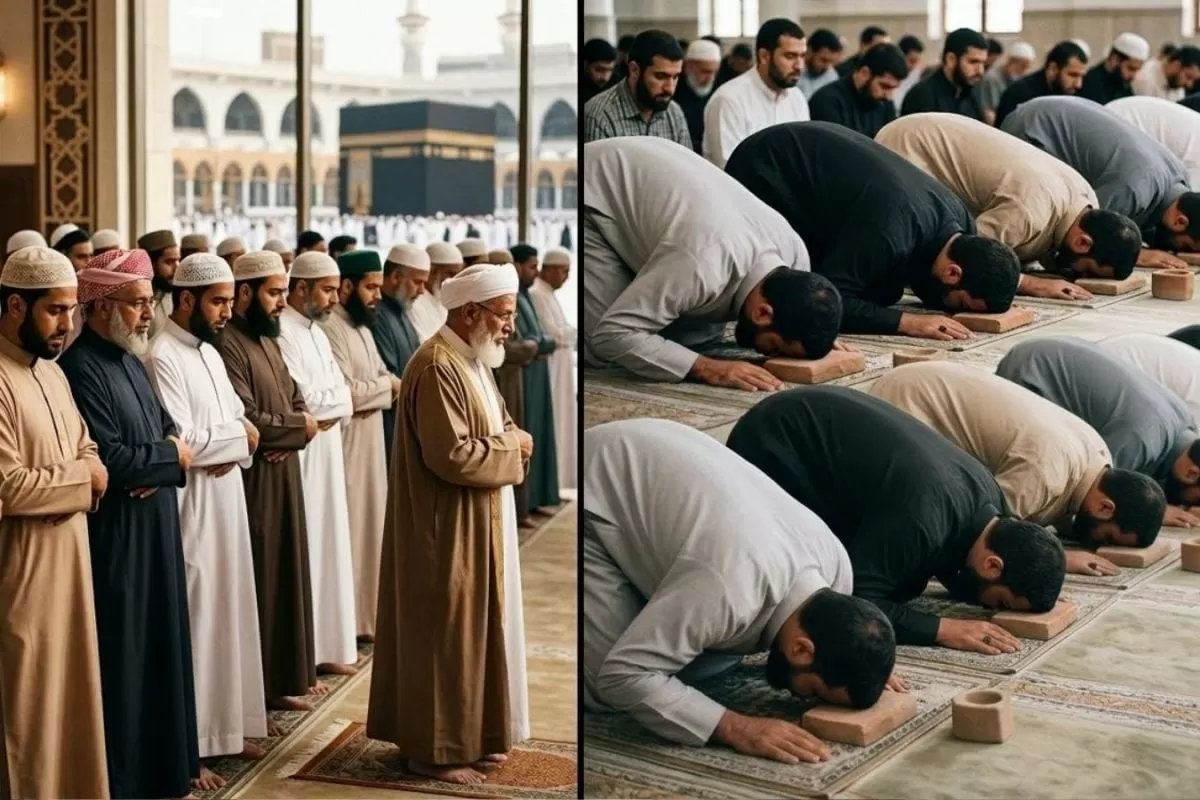
Islam, the world’s second-largest religion, has more than 1.8 billion followers. The religion is divided into two major sects- Sunni and Shia. While both sects share the same core beliefs and practices, they differ in their interpretation of who should have been the leader of the Muslim community after the death of Prophet Muhammad. This age-old dispute has been the cause of a rift between Sunni and Shia Muslims that has continued for centuries. In this article, we will explore the origins of this dispute and its impact on the Muslim world.
The division between Sunni and Shia Muslims can be traced back to the early days of Islam, after the death of Prophet Muhammad in 632 CE. At the time, there was a disagreement over who would succeed the Prophet as the leader (caliph) of the Muslim community. While Sunnis believed that Abu Bakr, one of the Prophet’s companions, was the rightful successor, Shias believed that Ali ibn Abi Talib, the Prophet’s cousin and son-in-law, should have been the chosen leader.
This disagreement arose due to the difference in interpretation of the way succession should be determined. Sunnis believed that the caliph should be chosen through the consensus of the Muslim community, while Shias believed that the caliph should be divinely appointed by God through the Prophet.
The division between Sunnis and Shias became more apparent during the reign of the third caliph, Uthman, when he was assassinated by a group of rebels. This event led to the split of the Muslim community, with Ali being chosen as the fourth caliph by his supporters (Shias), while the majority of Muslims (Sunnis) accepted the election of Uthman’s cousin, Muawiyah, as the new caliph.
The division between Sunnis and Shias continued to deepen over the years, as different beliefs, practices and traditions developed within each sect. While both sects share the same core beliefs and follow the teachings of the Quran, they have different interpretations of Islamic law, traditions and history.
One of the major differences between Sunnis and Shias is their understanding of the role of the Imams (leaders) within the community. Shias believe that the Imams are divinely appointed and hold a special spiritual authority, while Sunnis view them as political leaders who are chosen by the community.
The dispute over leadership has not only caused a rift between the two sects, but it has also led to political and social conflicts throughout history. The succession of the Umayyad and Abbasid dynasties, who were seen as illegitimate by Shias, intensified the divide between the two sects. The conflict over the leadership of the Muslim world has also been a contributing factor to many wars and conflicts in the Middle East.
Today, Sunnis make up the majority of the Muslim population, with Shias comprising around 10-15%. The divide between the two sects is felt globally, but it is most evident in countries like Iraq, Iran and Syria, where the majority of the population is aligned with one of the sects.
Despite the historical and ongoing divide, there have been efforts towards unity between Sunnis and Shias. In recent years, there have been initiatives to bridge the gap and promote dialogue between the two sects. One such effort is the “Amman Message”, a declaration issued by Muslim scholars from both sects, which acknowledges the validity of the different schools of thought within Islam and promotes mutual respect and acceptance.
The dispute over who should have led the Muslim community after the Prophet’s death remains a significant point of difference between Sunnis and Shias. However, it is essential to recognize that both sects share the same core beliefs and principles of Islam. As Muslims, it is crucial to focus on what unites us rather than what divides us.
In conclusion, the disagreement over leadership after the death of Prophet Muhammad has led to the division between Sunni and Shia Muslims. This difference has influenced the way each sect practices and interprets Islam, and has also caused political and social conflicts. While the dispute continues, it is essential for both sects to promote mutual respect and unity, as we are all followers of the same faith. Let us focus on the common ground and work towards building a united Muslim community, as we all strive to follow the path of the Prophet Muhammad.
