
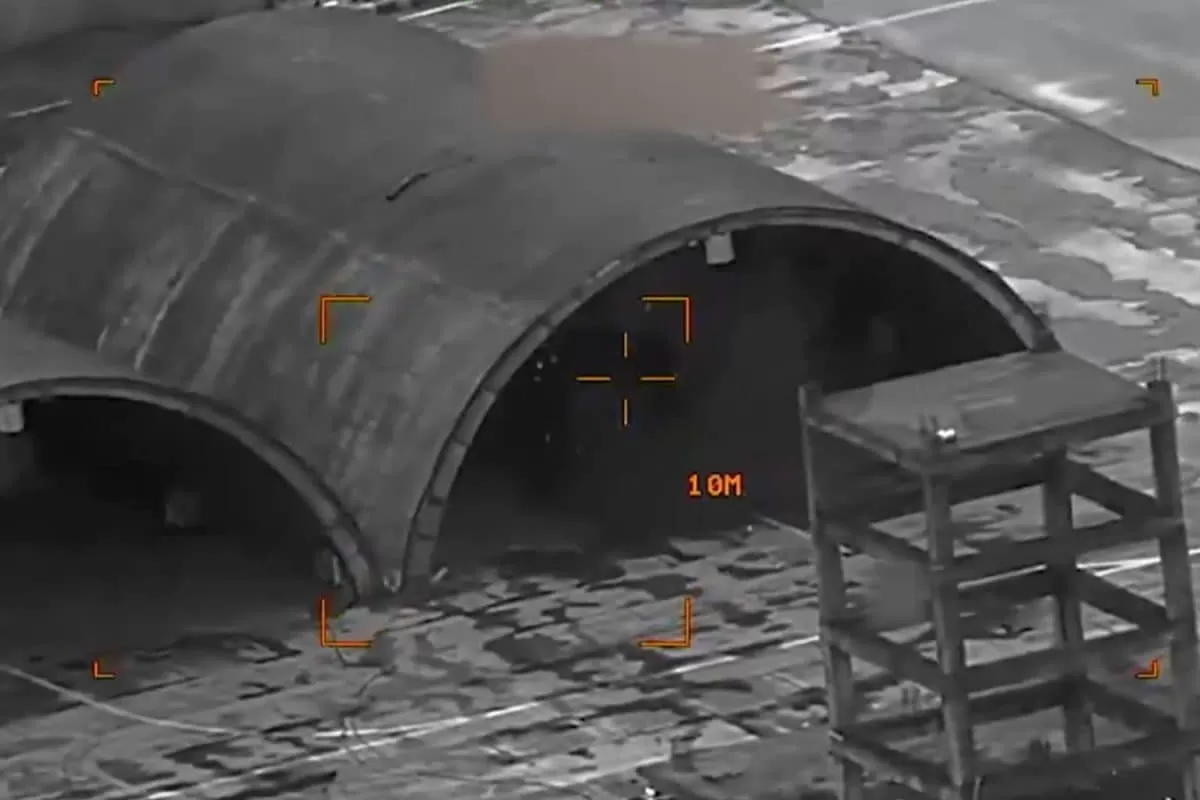
According to the United States Central Command (CENTCOM), Iran’s operational reach and influence are on the decline. This is due to the sustained and effective presence of the U.S. military, advanced surveillance capabilities, and strategic countermeasures.
For years, Iran has been a major player in the Middle East, often using its military and political influence to assert control over its neighbors and advance its own agenda. However, recent developments have shown that this once formidable power is facing significant challenges.
One of the key factors contributing to Iran’s declining influence is the sustained presence of the U.S. military in the region. The U.S. has maintained a strong military presence in the Middle East for decades, and this presence has only become more robust in recent years. With bases and troops strategically placed throughout the region, the U.S. is able to respond quickly to any potential threats or acts of aggression from Iran.
In addition to a strong military presence, the U.S. has also invested in advanced surveillance capabilities. This includes cutting-edge technology such as drones and satellites, which allow for constant monitoring of Iran’s activities. This advanced surveillance has proven to be a game-changer, as it provides valuable intelligence on Iran’s military movements and capabilities.
But perhaps the most significant factor contributing to Iran’s declining influence is the strategic countermeasures employed by the U.S. and its allies. These measures, which include economic sanctions and diplomatic pressure, have effectively curbed Iran’s ability to project its power and influence beyond its borders. With its economy suffering and its international relationships strained, Iran is finding it increasingly difficult to exert its dominance in the region.
The impact of these developments is evident in several key areas. For one, Iran’s once powerful military is now facing significant challenges. Its forces are spread thin, and it is struggling to keep up with the technological advancements made by the U.S. and its allies. This has severely weakened Iran’s ability to carry out its aggressive actions and has limited its options for responding to any potential threats.
Furthermore, Iran’s allies in the region are also feeling the effects of its declining influence. Countries such as Syria, Lebanon, and Yemen, which have long been under Iran’s control, are now facing significant challenges as they try to maintain their alliances with Tehran. With Iran’s power on the decline, these countries are finding it increasingly difficult to rely on their once powerful ally.
But perhaps the most significant impact of Iran’s declining influence is the shift in regional dynamics. With Iran’s influence waning, other players in the region are stepping up to fill the void. This includes countries such as Saudi Arabia and the United Arab Emirates, who are now taking a more active role in regional affairs. This shift in dynamics has brought about a more stable and peaceful environment, as these countries are more willing to engage in dialogue and work towards resolving conflicts.
In conclusion, it is clear that Iran’s operational reach and influence are on the decline. The sustained presence of the U.S. military, advanced surveillance capabilities, and strategic countermeasures have all played a crucial role in this decline. As a result, Iran is facing significant challenges and is finding it increasingly difficult to assert its dominance in the region. This has led to a more stable and peaceful Middle East, one where other players are now taking a more active role. With these developments, it is evident that the U.S. and its allies are successfully countering Iran’s aggressive actions and ensuring the safety and security of the region.
