
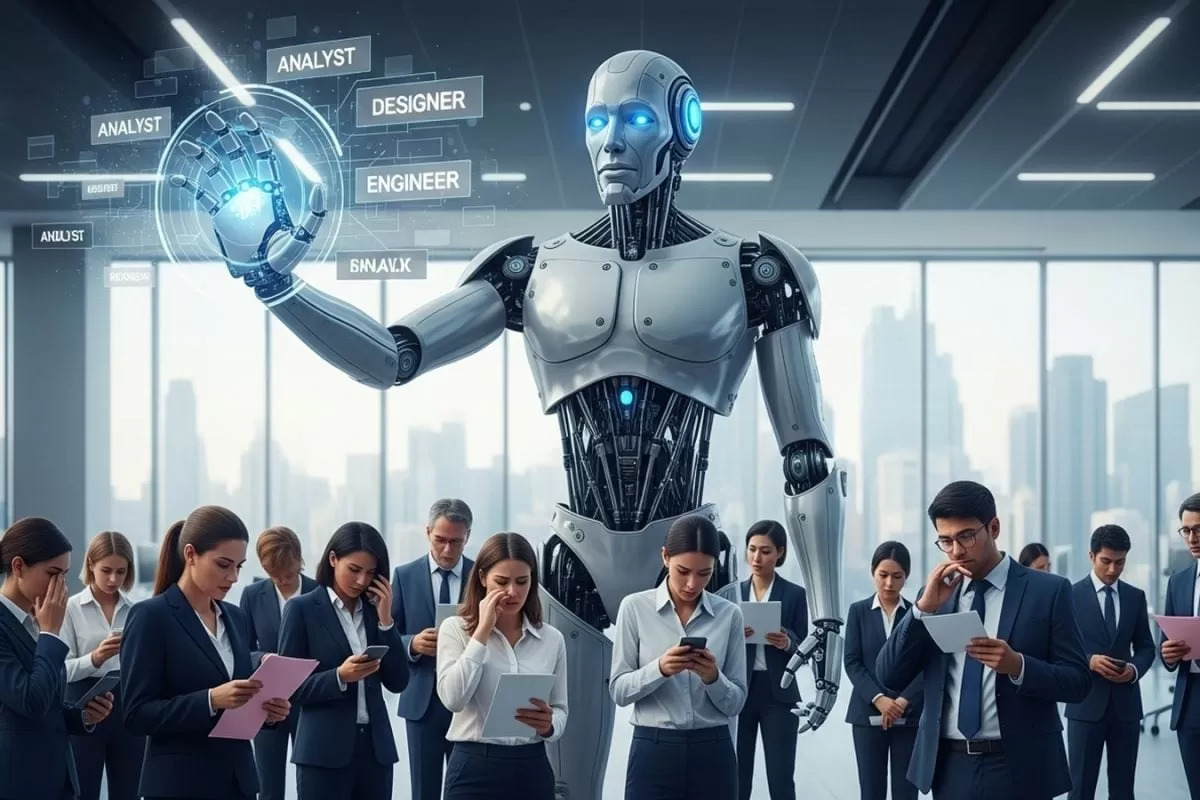
As technology continues to advance at an unprecedented rate, the question of whether or not AI will replace jobs has been a topic of much debate. However, with the rapid development and implementation of artificial intelligence, the question is now shifting from “Will AI replace jobs?” to “Which parts of our jobs will AI take over next?” This shift in perspective is a testament to the incredible potential of AI and its ability to revolutionize the way we work.
The rise of AI has already had a significant impact on the job market. Many tasks that were once performed by humans are now being automated, leading to concerns about job displacement. However, instead of fearing the potential loss of jobs, we should embrace the opportunities that AI presents. AI has the potential to enhance our productivity, efficiency, and overall quality of work.
One of the main reasons for the rapid growth of AI is its ability to process and analyze vast amounts of data at a speed and accuracy that surpasses human capabilities. This has already led to the automation of routine and repetitive tasks, freeing up time for employees to focus on more complex and creative tasks. For example, in the healthcare industry, AI is being used to analyze medical records and assist in diagnosing diseases, allowing doctors to spend more time with patients and provide better care.
In addition to automating routine tasks, AI is also being used to improve decision-making processes. With the help of machine learning algorithms, AI can analyze data and identify patterns that humans may not be able to see. This can lead to more informed and accurate decision-making, whether it’s in finance, marketing, or other industries. For instance, AI-powered chatbots are being used in customer service to provide quick and accurate responses to customer inquiries, improving overall customer satisfaction.
Another area where AI is making significant strides is in the field of robotics. With advancements in machine learning and natural language processing, robots are becoming more intelligent and capable of performing complex tasks. This has led to the use of robots in industries such as manufacturing, logistics, and even healthcare. In these industries, robots are able to work alongside humans, increasing efficiency and productivity while also reducing the risk of human error.
The integration of AI into our daily lives is also evident in the rise of virtual assistants such as Siri, Alexa, and Google Assistant. These AI-powered assistants are becoming increasingly sophisticated, able to understand and respond to natural language commands. They can perform a variety of tasks, from setting reminders and alarms to controlling smart home devices. As AI continues to evolve, we can expect these virtual assistants to become even more advanced and integrated into our daily routines.
While the advancements in AI are undoubtedly impressive, it’s important to note that it is not meant to replace humans, but rather to augment our capabilities. AI is not a threat to our jobs, but rather a tool that can help us work smarter and more efficiently. As AI takes over routine and repetitive tasks, it allows us to focus on tasks that require human skills such as creativity, critical thinking, and emotional intelligence. This will lead to a more fulfilling and rewarding work experience for employees.
Moreover, the integration of AI into the workforce will also create new job opportunities. As AI technology continues to evolve, there will be a growing demand for professionals with the skills to develop, implement, and maintain AI systems. This will lead to the creation of new job roles, such as AI trainers, data scientists, and AI ethicists. The growth of AI will also open up opportunities for individuals to upskill and reskill, ensuring that they remain relevant in the job market.
In conclusion, as the technology continues to evolve, the question of whether AI will replace jobs is becoming less relevant. Instead, we should focus on the potential of AI to enhance our work and create new opportunities. AI is not a threat, but rather a tool that can help us work smarter and more efficiently. It’s time to embrace the advancements in AI and look forward to a future where humans and AI work together to achieve greater heights.
