
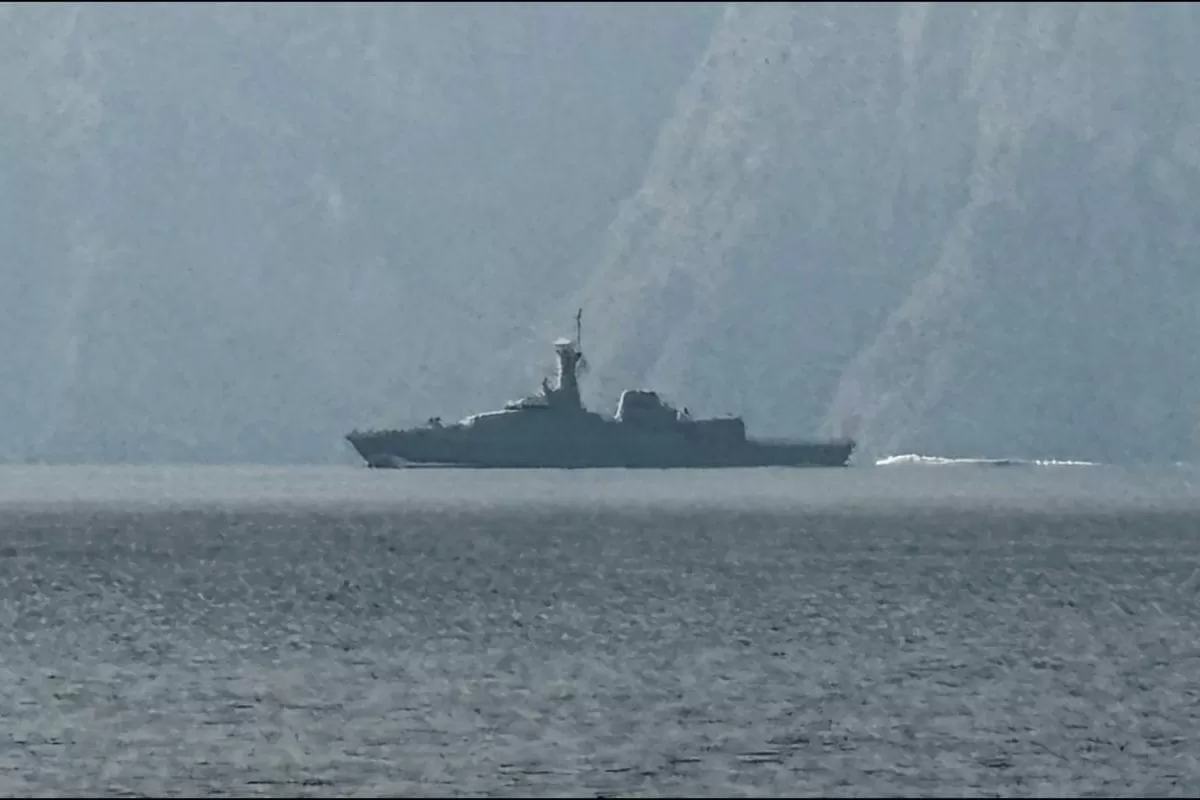
The Strait of Hormuz, a narrow waterway located between Iran and Oman, has been making headlines recently due to its strategic importance in the global oil trade. According to a recent note, the Islamic Revolutionary Guard Corps (IRGC) is taking advantage of this crucial waterway, which handles 20% of the world’s oil supply, equivalent to 20 million barrels per day.
The IRGC, a branch of the Iranian Armed Forces, has been using the Strait of Hormuz as a tool to exert its influence and control over the region. With its vast military capabilities and control over the Iranian government, the IRGC has been able to manipulate the flow of oil through this vital waterway, creating a sense of fear and uncertainty among global oil markets.
This strategic advantage has given the IRGC immense power and leverage in the region, allowing them to use the strait as a bargaining chip in their political and economic agendas. By threatening to disrupt the flow of oil through the Strait of Hormuz, the IRGC has been able to assert its dominance and push its agenda forward.
However, the IRGC’s actions have not gone unnoticed. The international community has been closely monitoring the situation and has expressed concerns over the IRGC’s use of the strait for their own gain. The United States, in particular, has been vocal about the need to protect the freedom of navigation in the region and has even deployed military assets to ensure the safety of oil tankers passing through the strait.
Despite these concerns, the IRGC continues to use the Strait of Hormuz to its advantage. This has not only caused disruptions in the global oil trade but has also led to an increase in tensions in the region. The recent attacks on oil tankers in the Gulf of Oman have been attributed to the IRGC, further highlighting their control over the strait and their willingness to use it as a tool for their own interests.
The situation in the Strait of Hormuz is a cause for concern for the global community. The IRGC’s actions not only affect the flow of oil but also have far-reaching consequences for the stability of the region. It is imperative that steps are taken to ensure the safe and free passage of oil through this vital waterway.
In response to the IRGC’s actions, the international community must come together and find a solution to this issue. Diplomatic efforts must be made to address the root cause of the problem and find a peaceful resolution. It is also crucial for countries to diversify their oil supply routes and reduce their dependence on the Strait of Hormuz.
Furthermore, it is essential for countries in the region to work towards de-escalating tensions and promoting stability. The Strait of Hormuz should not be used as a tool for political and economic gain, and all parties must respect the freedom of navigation in this waterway.
In conclusion, the IRGC’s use of the Strait of Hormuz as an advantage is a cause for concern for the global community. The international community must come together and find a solution to this issue before it escalates further. It is time for all parties involved to prioritize the stability and safety of the region and put an end to the manipulation of this vital waterway.
