
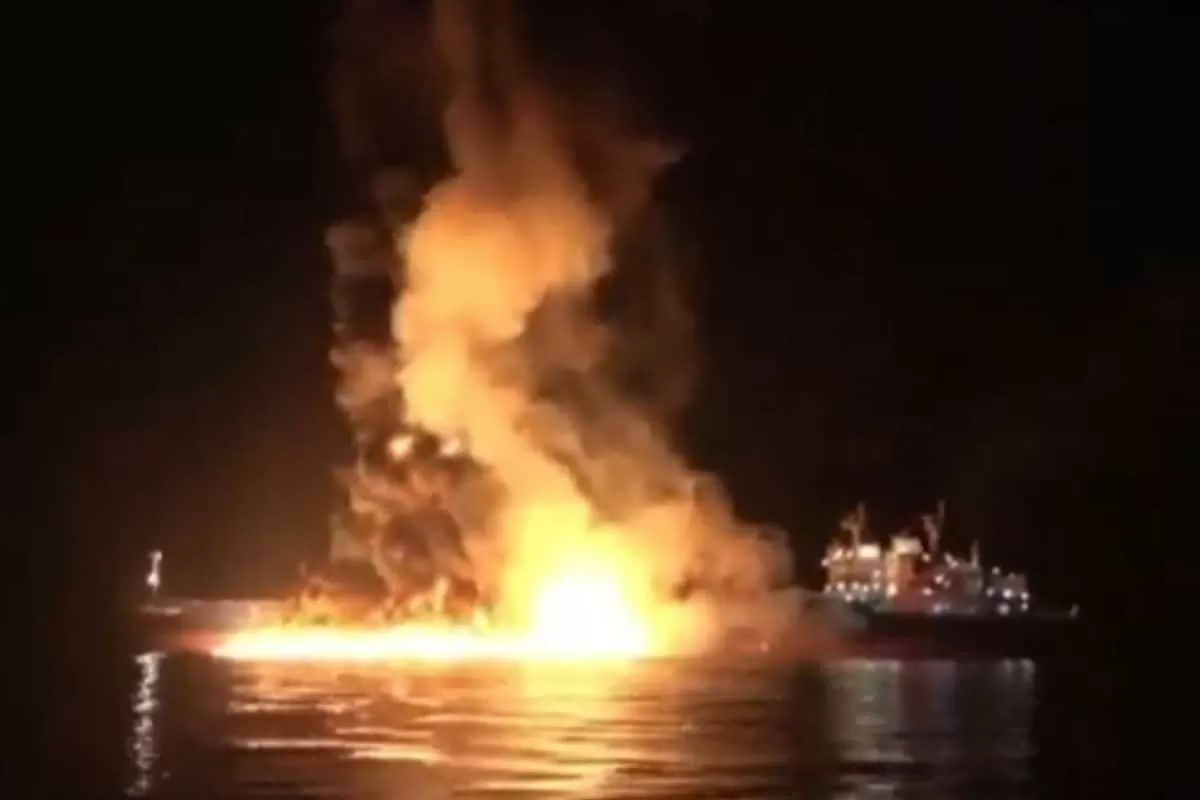
Two fuel tankers were attacked near Iraqi waters, resulting in the tragic death of one Indian sailor and causing damage to the ships. The incident has sent shockwaves through the maritime industry and has once again highlighted the dangers faced by seafarers in their line of duty.
The attack took place on Monday, 15th March, when the two tankers were sailing through the Gulf of Oman, en route to their respective destinations. The Indian sailor, identified as Ramesh Kumar, was on board one of the tankers when it was hit by an explosive-laden drone. The blast caused a massive fire on the ship, leading to the death of Kumar and injuring several others.
The second tanker was also targeted by a similar attack, but fortunately, the crew members were able to take evasive action and prevent any casualties. However, the ship sustained significant damage, and the crew members were left traumatized by the terrifying experience.
The Indian government has condemned the attack and expressed its condolences to the family of the deceased sailor. In a statement, the Ministry of External Affairs said, “We are deeply saddened by the loss of an Indian sailor in the recent attack on two fuel tankers near Iraqi waters. Our thoughts and prayers are with the family of the deceased, and we stand ready to provide all necessary assistance to them.”
The attack has once again raised concerns about the safety and security of seafarers in the volatile waters of the Gulf region. The International Maritime Organization (IMO) has also expressed its concern and called for a thorough investigation into the incident. The organization has urged all parties involved to ensure the safety of seafarers and to take necessary measures to prevent such attacks in the future.
The Indian shipping industry has also voiced its concerns and called for better protection of its sailors. The Indian National Shipowners’ Association (INSA) has urged the government to take immediate action to safeguard the lives of Indian seafarers. In a statement, INSA said, “The safety and security of our seafarers are of utmost importance, and we urge the government to take all necessary steps to ensure their protection.”
The attack on the fuel tankers has once again highlighted the vulnerability of ships in the Gulf region. The ongoing conflict in the region has made it a hotbed for piracy and other maritime threats. The Indian government has been actively working with other countries to ensure the safety of its ships and seafarers in the region. However, more needs to be done to address the growing security concerns in the Gulf waters.
The incident has also raised questions about the effectiveness of the security measures in place for ships sailing through the Gulf of Oman. The shipping industry has called for a review of the existing security protocols and the deployment of additional security forces to protect ships and seafarers.
The attack on the fuel tankers is a grim reminder of the dangers faced by seafarers in their line of duty. These brave men and women leave their families behind and embark on long voyages, facing numerous challenges and risks along the way. It is the responsibility of all stakeholders to ensure their safety and well-being.
The Indian sailor, Ramesh Kumar, lost his life while performing his duties, and his sacrifice will not be forgotten. His death is a tragic reminder of the risks faced by seafarers every day. The maritime community must come together to honor his memory and work towards creating a safer environment for seafarers.
In conclusion, the attack on the two fuel tankers near Iraqi waters is a tragic incident that has claimed the life of an Indian sailor and caused damage to the ships. The Indian government and the shipping industry have condemned the attack and called for better protection of seafarers in the Gulf region. It is imperative that all stakeholders work together to ensure the safety and security of ships and seafarers in these volatile waters. Let us honor the memory of Ramesh Kumar and strive towards creating a safer and more secure maritime environment.
