
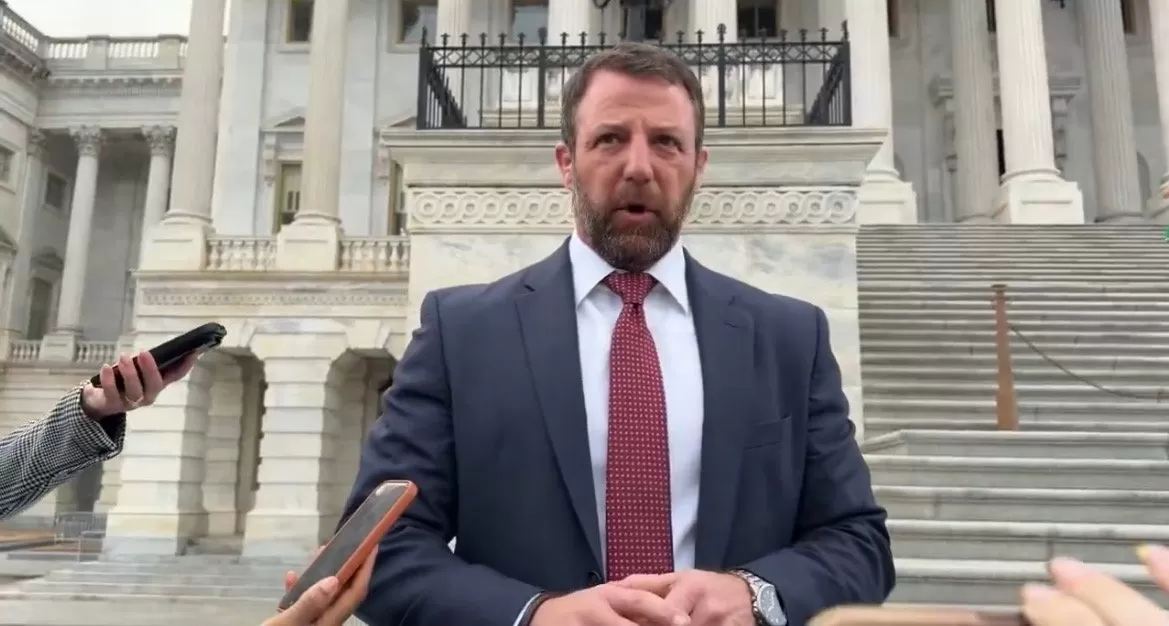
Department of Homeland Security Secretary Markwayne Mullin has recently made headlines with his plans to take action against “sanctuary cities” that refuse to comply with federal immigration laws. In a bold move, Mullin is considering removing customs agents from these cities’ international airports, in an effort to put pressure on local governments to cooperate with federal immigration policies.
This decision comes after years of debate and controversy surrounding the issue of sanctuary cities, which are defined as municipalities that limit their cooperation with federal immigration authorities in order to protect undocumented immigrants. These cities have been a hot topic in the political arena, with some arguing that they provide a safe haven for criminals and others arguing that they protect vulnerable populations.
But now, with Mullin at the helm of the Department of Homeland Security, it seems that the federal government is taking a more aggressive stance against these cities. In an interview with The Gateway Pundit, Mullin stated that he is determined to hold sanctuary cities accountable for their actions.
“We cannot allow these cities to subvert federal immigration laws and put the safety of our citizens at risk,” Mullin declared. “By removing customs agents from their international airports, we are sending a clear message that we will not tolerate their disregard for our laws.”
This move has already sparked controversy and debate, with some criticizing it as a heavy-handed tactic and others applauding it as a necessary step to enforce federal immigration policies. But regardless of one’s stance on the issue, it cannot be denied that Mullin’s actions are a strong statement of the current administration’s stance on immigration.
President Trump has long been a vocal opponent of sanctuary cities, and Mullin’s decision to take action against them is just another example of the administration’s tough stance on immigration. This move also aligns with Trump’s promise to crack down on illegal immigration and strengthen border security.
While some may argue that removing customs agents from international airports will have little impact on sanctuary cities, Mullin believes that it will send a powerful message to local governments. By targeting these cities’ main points of entry, the federal government is making it clear that they will not tolerate any resistance to their immigration policies.
Moreover, this decision could have far-reaching consequences for sanctuary cities. Without customs agents at their international airports, these cities may see a decline in tourism and business, which could have a significant impact on their economies. This could potentially force them to reconsider their stance on sanctuary policies.
But beyond the political implications, Mullin’s actions also have a deeper significance. By taking a firm stand against sanctuary cities, the Department of Homeland Security is sending a message to all Americans that the federal government is committed to protecting the safety and security of its citizens.
In a time of increasing division and polarization, this is a refreshing reminder that the government is working towards a common goal of ensuring the safety and well-being of its people. It also serves as a reminder that the rule of law must be respected and upheld, regardless of personal opinions or political affiliations.
In conclusion, Secretary Markwayne Mullin’s decision to consider removing customs agents from sanctuary cities’ international airports is a bold and decisive move that has sparked debate and controversy. But beyond the political implications, it serves as a strong statement of the current administration’s stance on immigration and a reminder that the rule of law must be respected. Only time will tell how this decision will ultimately impact sanctuary cities, but one thing is for sure – it has already made a powerful statement.
