
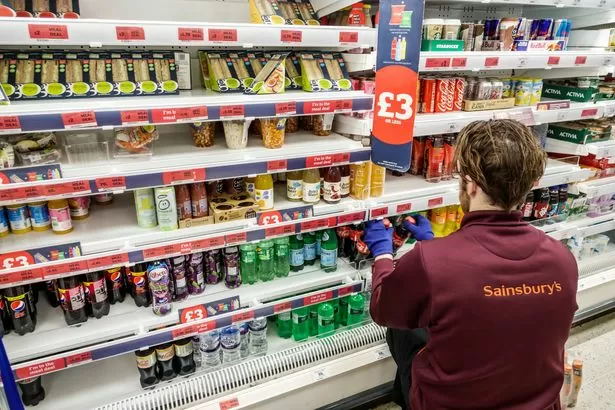
Shoppers have been left scratching their heads after spotting plastic sliders on the shelves of Sainsbury’s supermarkets. Many have taken to social media to express their confusion and frustration, with some even claiming that these sliders make their shopping experience more “awkward”. However, there is a good reason for these sliders, and they actually serve a practical purpose. Let’s take a closer look at the story behind these plastic sliders and why they are actually a useful addition to supermarkets.
Sainsbury’s, one of the UK’s leading supermarkets, has recently introduced these plastic sliders on their shelves in an effort to reduce food waste. The sliders are placed on the shelves next to products that are close to their expiry date, allowing customers to easily see and purchase these items at a discounted price. This initiative is part of Sainsbury’s “Waste less, Save more” campaign, which aims to reduce food waste and help customers save money.
With the rising concern over food waste and its impact on the environment, Sainsbury’s decision to introduce these plastic sliders is a commendable move. According to the Food Standards Agency, the UK is throwing away 7.3 million tonnes of food every year, and a significant portion of this is due to expiration dates. By offering these discounted products, Sainsbury’s is not only helping customers save money but also playing their part in reducing food waste.
However, some shoppers have raised concerns about the use of plastic in these sliders, claiming that it goes against the supermarket’s efforts to be more environmentally friendly. And while it is true that plastic is a cause for concern when it comes to our planet, Sainsbury’s has assured that these sliders are made from recycled material and can be recycled again after use. This means that they are not adding to the plastic waste problem and are actually promoting the concept of a circular economy.
Moreover, these sliders are not just about reducing food waste, they also offer benefits to customers. By highlighting products that are close to their expiration date, customers can make informed decisions and purchase items that they can consume immediately. This not only saves them money, but it also ensures that food is not going to waste in their own homes. It’s a win-win situation for both customers and the environment.
Some shoppers have also expressed their concern that these sliders make shopping more difficult and awkward, as they have to constantly check for the sliders and read the expiration dates. However, Sainsbury’s has taken this into consideration and has even provided a scanning app that allows customers to simply scan the barcode of a product and see if it has a slider or not. This makes the process much quicker and more convenient for shoppers.
The introduction of these plastic sliders is just one of the many steps that Sainsbury’s has taken towards becoming a more sustainable and environmentally friendly supermarket. They have also introduced refillable packaging for products such as pasta and rice and have committed to using 100% recyclable, reusable, or compostable packaging by 2025. These efforts show that Sainsbury’s is taking their responsibility towards the environment seriously and is constantly looking for ways to improve.
In conclusion, the plastic sliders spotted on Sainsbury’s supermarket shelves might have caused some confusion and frustration among shoppers, but they actually serve a greater purpose. By using these sliders, Sainsbury’s is making a positive impact on the environment by reducing food waste and promoting a circular economy. So next time you see these sliders, remember that they are not just making your shopping experience more awkward, they are actually helping to make a difference. Let’s support this initiative and work together towards a more sustainable future.
