
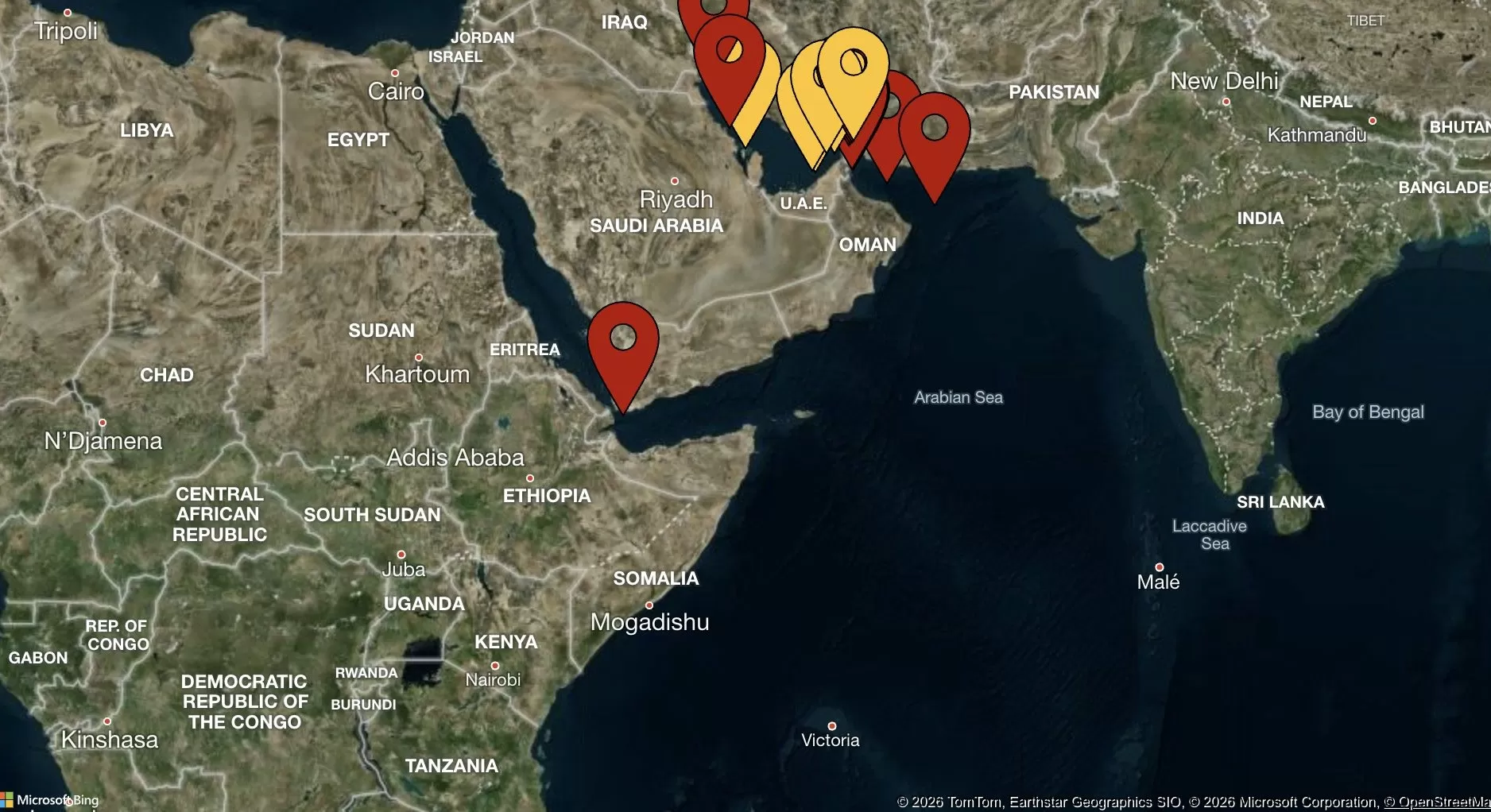
The Strait of Hormuz, a vital waterway for global oil transportation, has once again become the center of attention as a cargo vessel was struck by an unknown projectile and erupted in flames. This incident occurred amidst the escalating conflict in the Middle East, raising concerns about the safety of international shipping in the region.
According to reports, the cargo vessel was transiting the highly strategic Strait of Hormuz when it was hit by an unidentified projectile. The impact caused a massive fire to break out on the vessel, sending plumes of black smoke into the air. The crew members on board were immediately evacuated and fortunately, there were no casualties reported.
This incident has once again highlighted the volatile situation in the Middle East and the potential risks that come with navigating through the Strait of Hormuz. The region has been plagued by political tensions and conflicts for decades, making it a challenging route for international shipping. The recent attack on the cargo vessel only adds to the growing concerns about the safety of ships passing through this crucial waterway.
The Strait of Hormuz, located between Iran and Oman, is a narrow strip of water that connects the Persian Gulf to the Gulf of Oman and the Arabian Sea. It is a vital transit route for oil tankers, with nearly one-fifth of the world’s oil passing through it. Any disruption in the flow of oil through this waterway can have a significant impact on the global economy. Therefore, the safety and security of ships transiting through the Strait of Hormuz is of utmost importance.
The cargo vessel that was struck by the unknown projectile was reportedly carrying goods from one country to another, completely unrelated to the ongoing conflicts in the region. This raises serious concerns about the indiscriminate nature of the attack and the potential risks it poses to innocent civilians and international trade.
The incident has also sparked speculations about the possible perpetrators behind the attack. While no group or country has claimed responsibility for the attack, it is widely believed to be a deliberate act of aggression. This is not the first time that ships passing through the Strait of Hormuz have been targeted. In the past, there have been several incidents of sabotage and attacks on oil tankers in the region, further highlighting the need for enhanced security measures.
The Strait of Hormuz has always been a volatile region, with political tensions and conflicts constantly simmering. The recent attack on the cargo vessel is a stark reminder of the risks involved in navigating through this waterway. It is imperative for all countries to come together and work towards ensuring the safety and security of ships passing through the Strait of Hormuz.
The international community must condemn this act of aggression and hold the perpetrators accountable. The safety of innocent civilians and the smooth flow of international trade must not be compromised due to political conflicts. It is the responsibility of all nations to work towards maintaining peace and stability in the region.
In conclusion, the attack on the cargo vessel in the Strait of Hormuz is a cause for serious concern. It highlights the need for increased security measures in the region and the importance of international cooperation in ensuring the safety of ships passing through this vital waterway. It is crucial for all countries to come together and find a peaceful resolution to the ongoing conflicts in the Middle East, to prevent such incidents from occurring in the future. Let us hope that this incident serves as a wake-up call for the international community to take necessary actions to ensure the safety of ships and crew members in the Strait of Hormuz.
